Industry
Saas
Industry
Saas
Industry
Saas
Year
2022
Year
2022
Year
2022
Role
Lead Product/UX Designer
Role
Lead Product/UX Designer
Role
Lead Product/UX Designer
Formant
SaaS Marketing System for a Robotics Platform

Overview
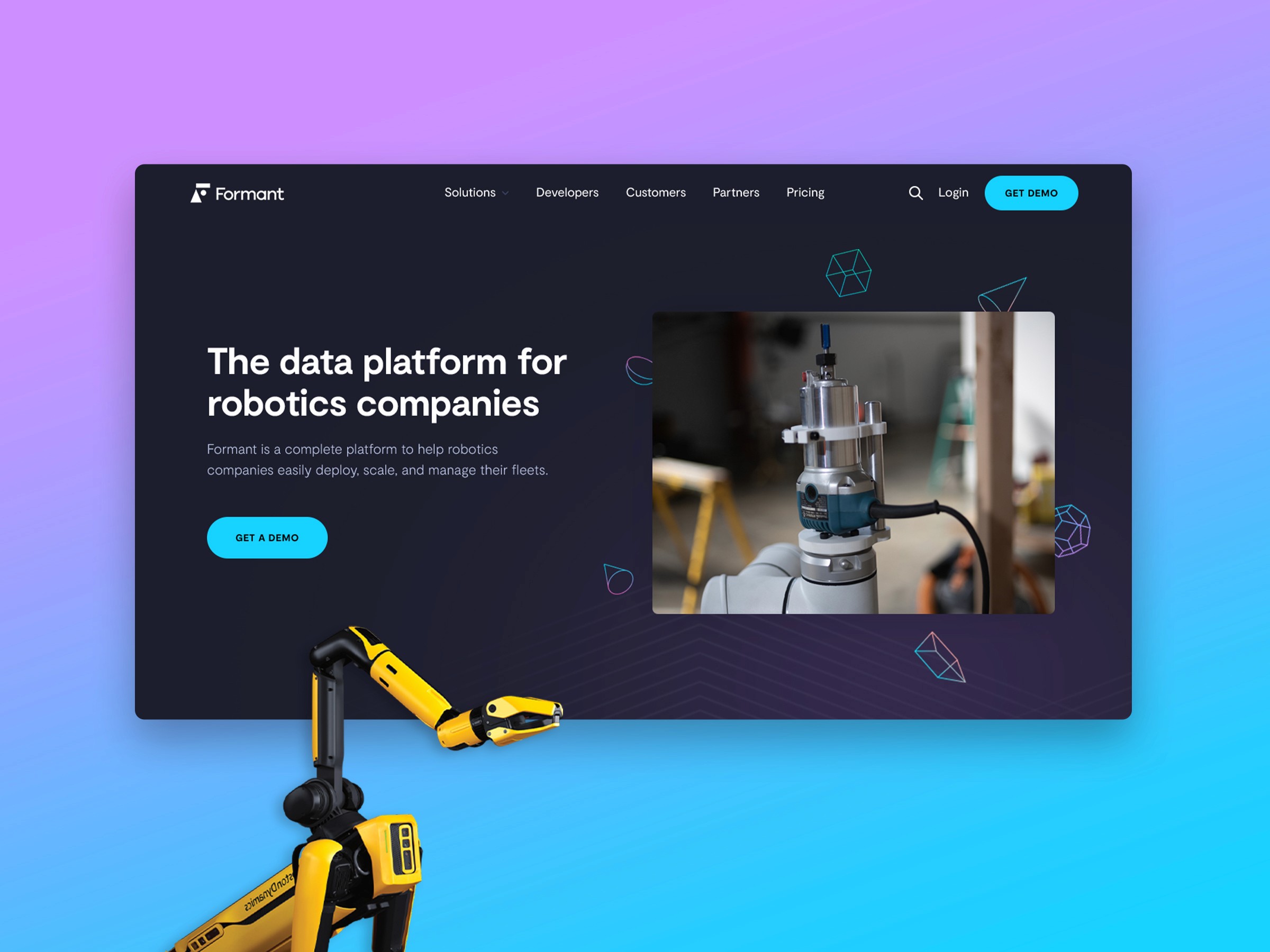
Formant is a SaaS platform used to manage, monitor, and scale autonomous robotic fleets. As the product matured, the company needed a marketing system that could clearly communicate its value to both executive decision-makers and technical engineering leads, while supporting a growing mix of acquisition channels.
I led the end-to-end architecture and design of a modular SaaS marketing system spanning the core website, conversion-focused landing pages, long-form content, and downloadable assets. The goal was to position Formant as a production-ready, off-the-shelf SaaS solution—approachable at first glance, yet credible under deep technical evaluation.
Formant is a SaaS platform used to manage, monitor, and scale autonomous robotic fleets. As the product matured, the company needed a marketing system that could clearly communicate its value to both executive decision-makers and technical engineering leads, while supporting a growing mix of acquisition channels.
I led the end-to-end architecture and design of a modular SaaS marketing system spanning the core website, conversion-focused landing pages, long-form content, and downloadable assets. The goal was to position Formant as a production-ready, off-the-shelf SaaS solution—approachable at first glance, yet credible under deep technical evaluation.
The Challenge
Formant’s SaaS product is powerful but complex. Earlier marketing leaned heavily technical, making it difficult for non-technical stakeholders to quickly assess fit, while still needing to satisfy engineers responsible for implementation.
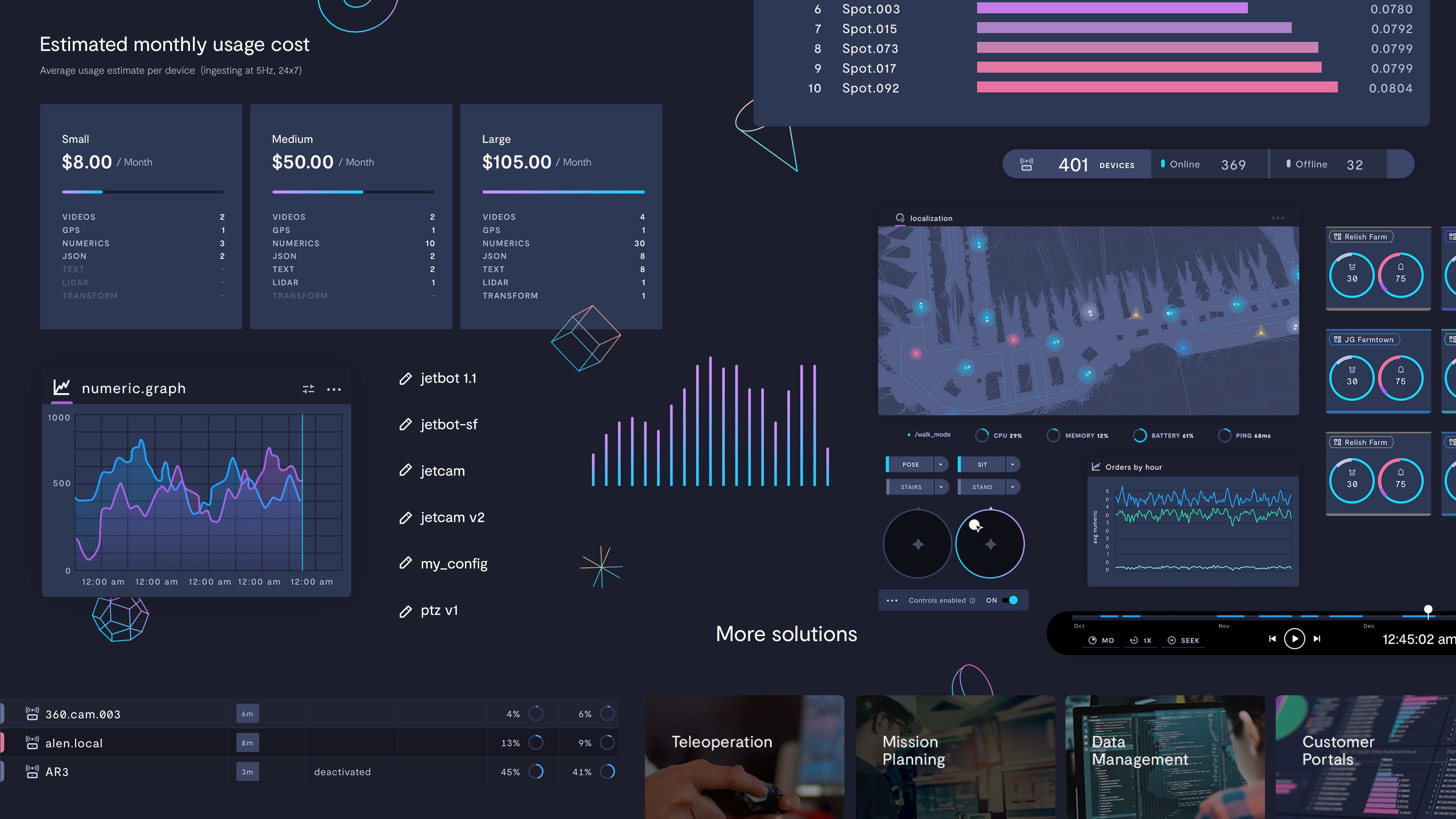
The product interface itself is highly digital and data-dense—built for real-time monitoring, control, and analysis. A core challenge was translating that gadget-forward SaaS UI into a marketing experience that felt authentic to the product without overwhelming first-time visitors.
Formant’s SaaS product is powerful but complex. Earlier marketing leaned heavily technical, making it difficult for non-technical stakeholders to quickly assess fit, while still needing to satisfy engineers responsible for implementation.
The product interface itself is highly digital and data-dense—built for real-time monitoring, control, and analysis. A core challenge was translating that gadget-forward SaaS UI into a marketing experience that felt authentic to the product without overwhelming first-time visitors.
The Audience
The system needed to serve two primary audiences:
Founders and CEOs, looking to quickly confirm that Formant could support their business and scale with their fleet.
Lead Engineers, who needed detailed insight into workflows, architecture, and real product behavior.
The experience had to support both perspectives without fragmenting the SaaS story or forcing users down a single path.
The system needed to serve two primary audiences:
Founders and CEOs, looking to quickly confirm that Formant could support their business and scale with their fleet.
Lead Engineers, who needed detailed insight into workflows, architecture, and real product behavior.
The experience had to support both perspectives without fragmenting the SaaS story or forcing users down a single path.
The Approach
I owned the information architecture and experience strategy, informed by analytics and stakeholder input. Rather than a single funnel, the SaaS marketing system was designed around cold and warm entry points.
Cold experiences—used for ads, events, and first-touch traffic—prioritized clarity, product visibility, and credibility signals. Warm experiences—used for email campaigns and known contacts—allowed users to move more quickly into deeper technical content.
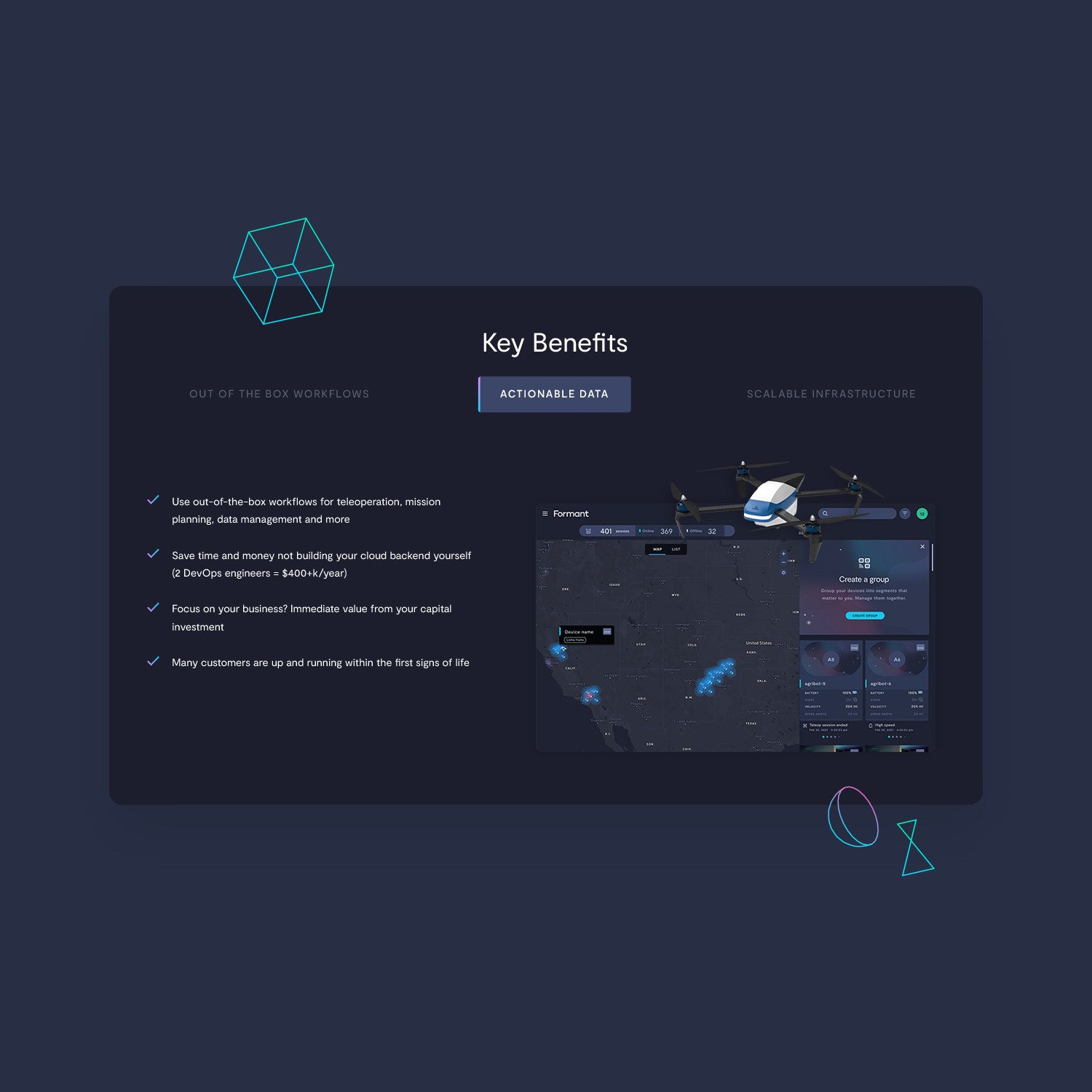
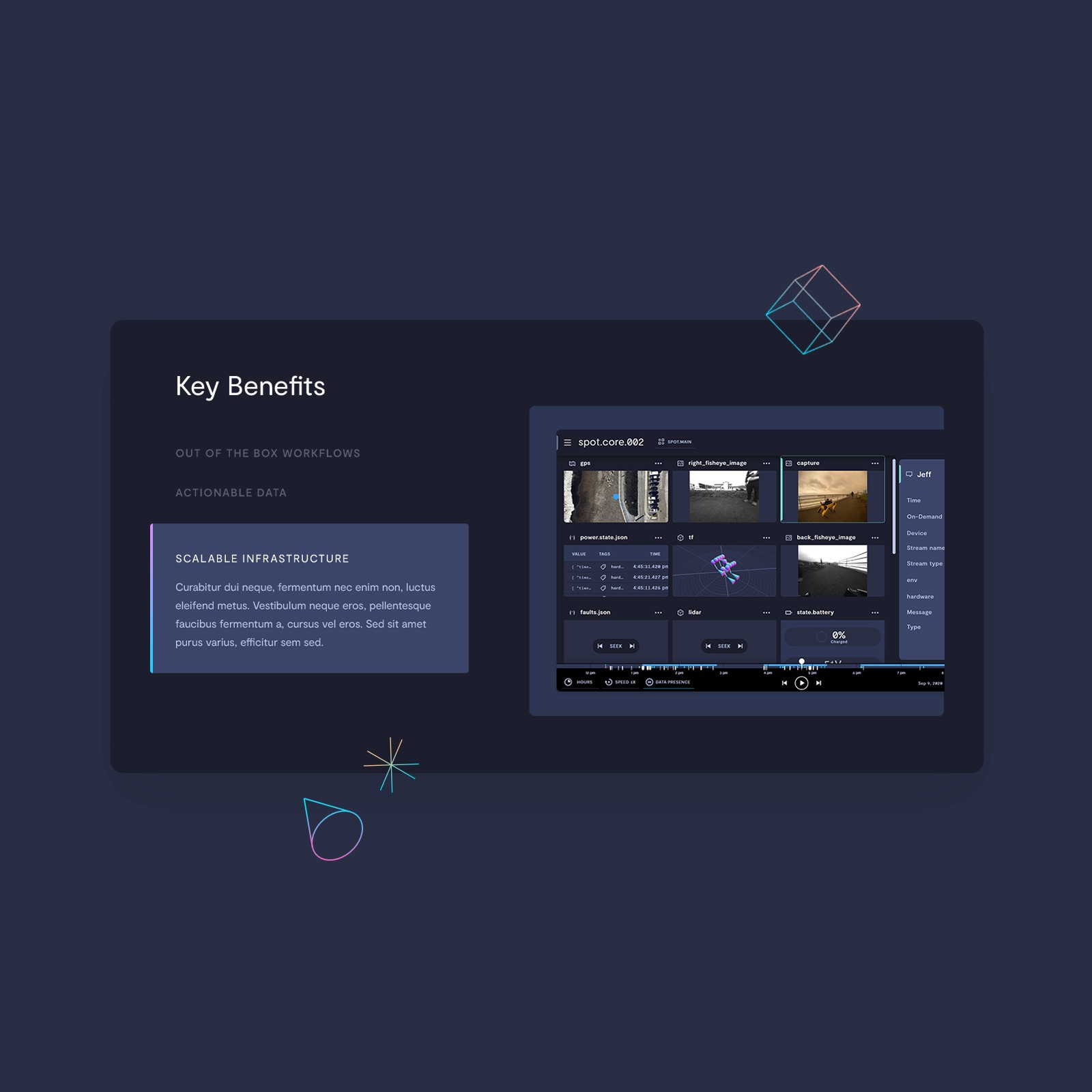
Visually, I intentionally adapted patterns from Formant’s product UI into the marketing system. The SaaS interface’s dark-mode environments, modular panels, and data visualizations informed the site’s structure, contrast, and density—helping the marketing experience feel immediately credible to engineers while signaling maturity and readiness to executives.
I owned the information architecture and experience strategy, informed by analytics and stakeholder input. Rather than a single funnel, the SaaS marketing system was designed around cold and warm entry points.
Cold experiences—used for ads, events, and first-touch traffic—prioritized clarity, product visibility, and credibility signals. Warm experiences—used for email campaigns and known contacts—allowed users to move more quickly into deeper technical content.
Visually, I intentionally adapted patterns from Formant’s product UI into the marketing system. The SaaS interface’s dark-mode environments, modular panels, and data visualizations informed the site’s structure, contrast, and density—helping the marketing experience feel immediately credible to engineers while signaling maturity and readiness to executives.
The Solution
The final system included:
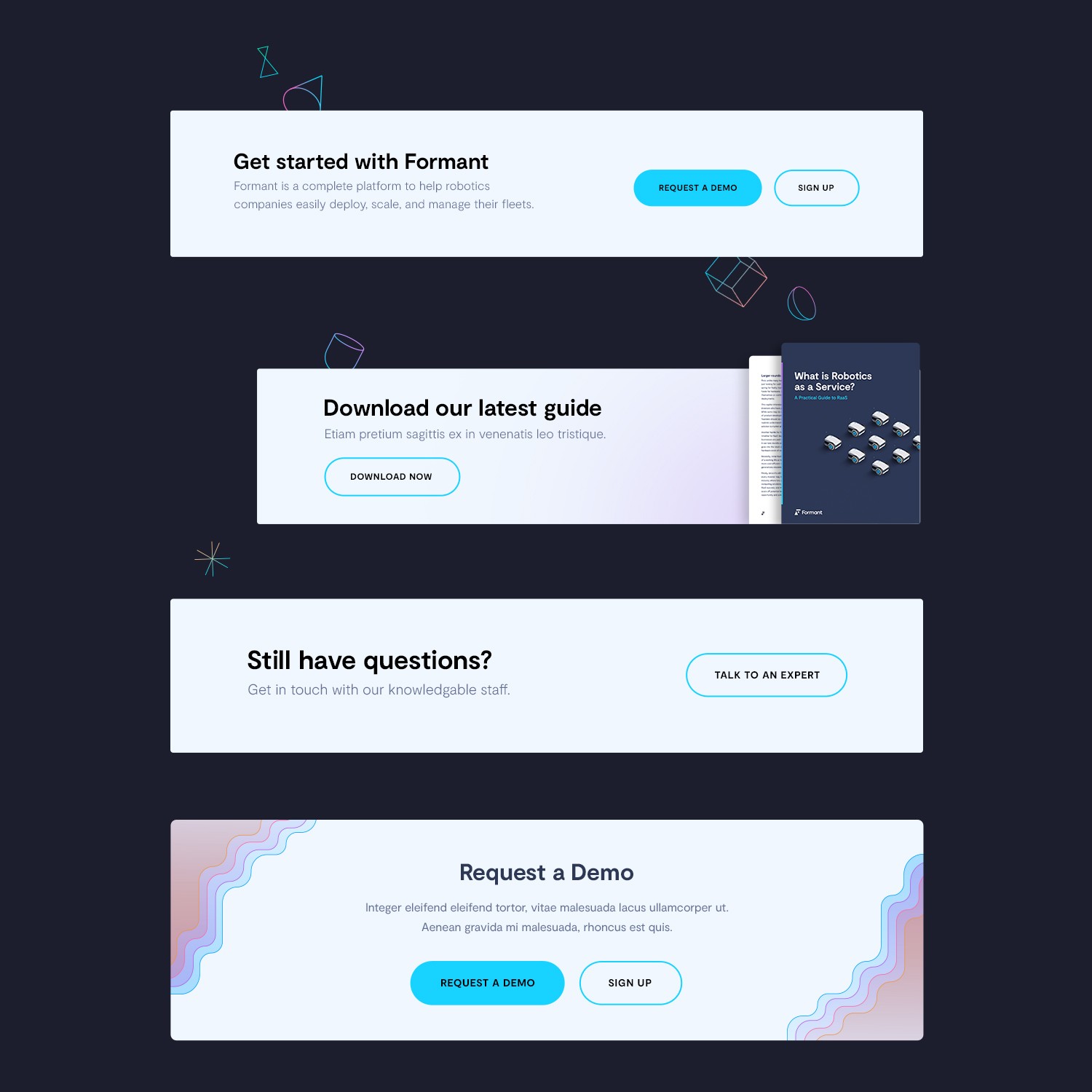
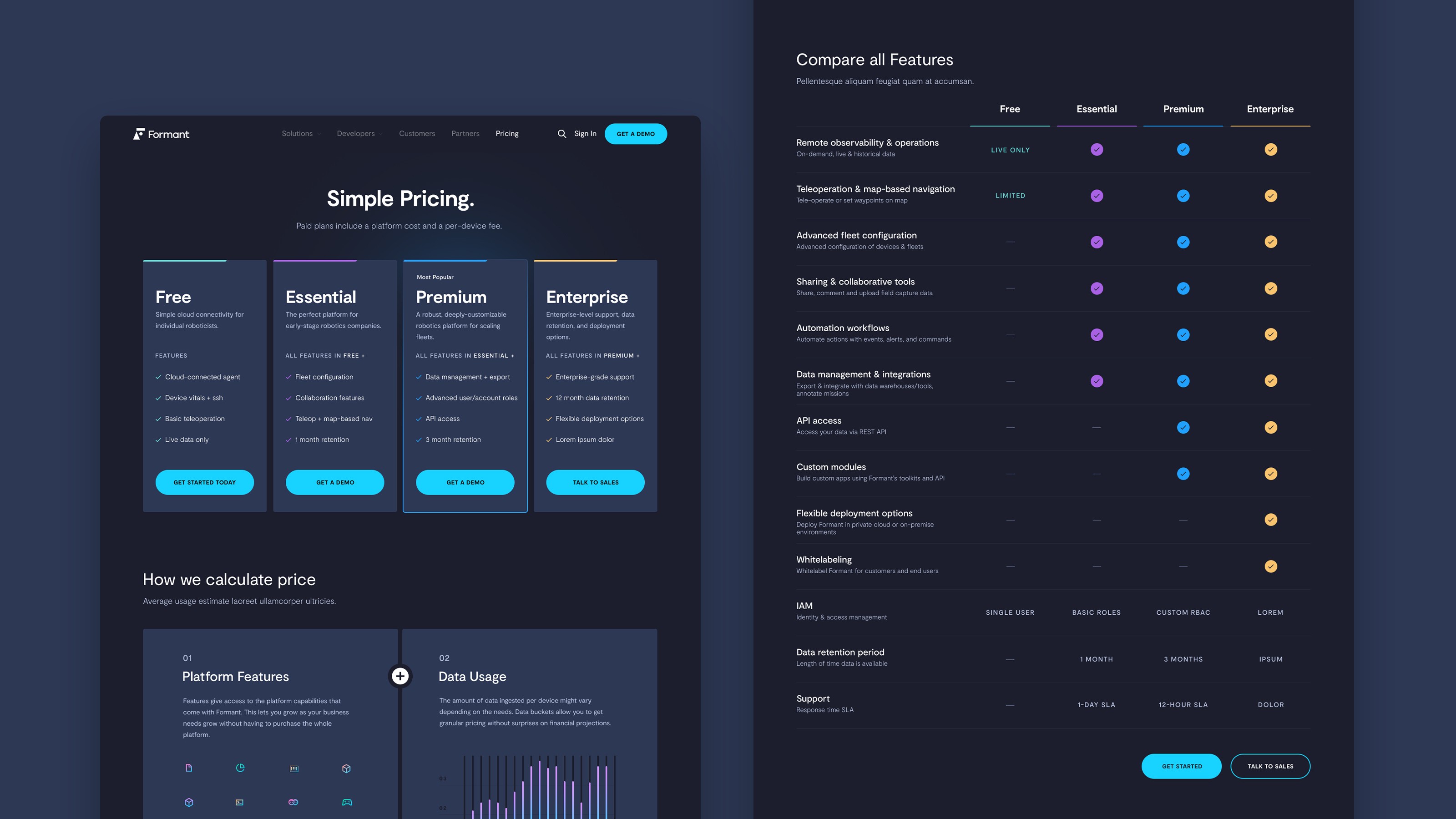
A re-architected SaaS marketing website organized by audience intent
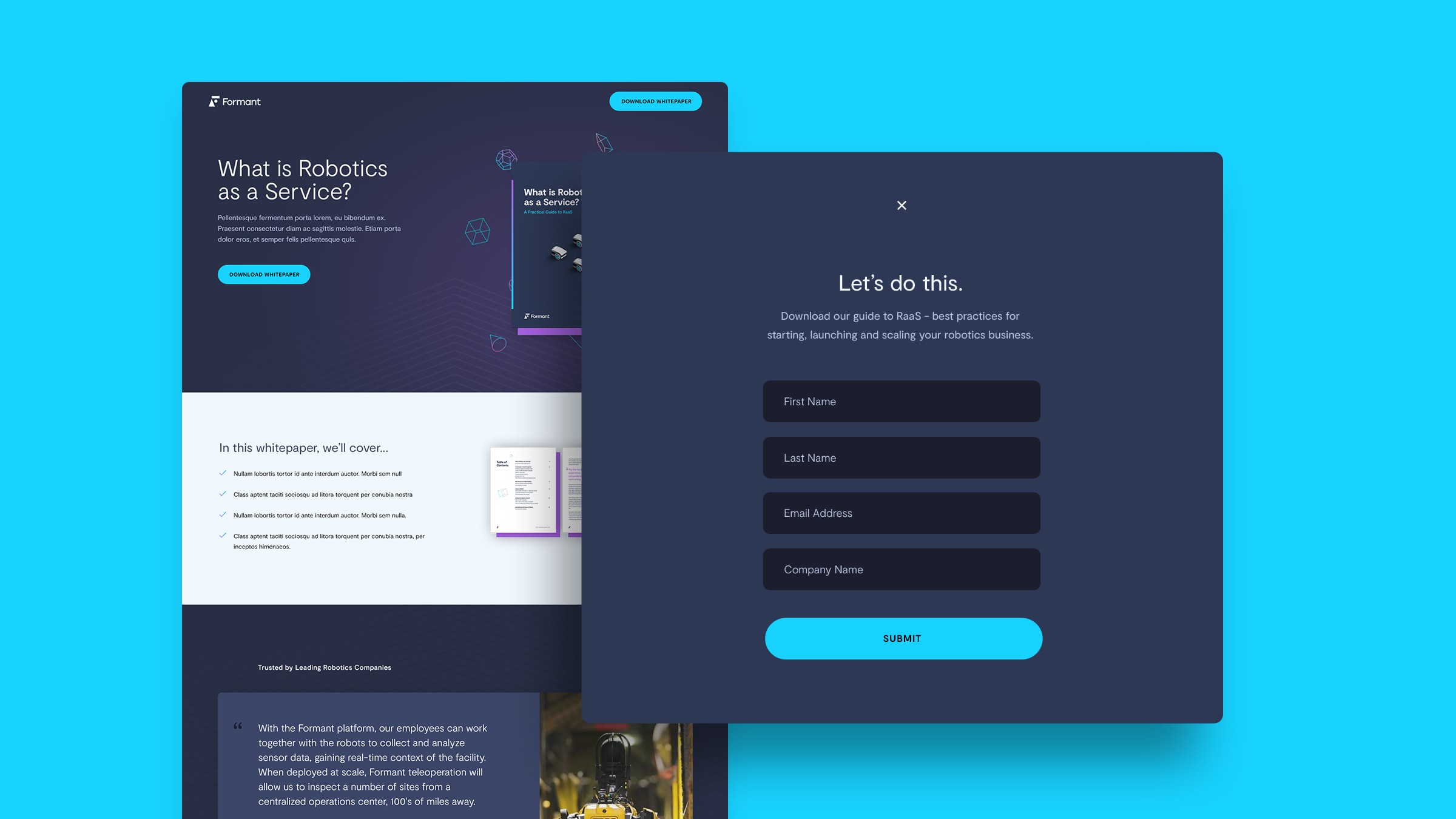
Conversion-focused landing pages with cold and warm variants
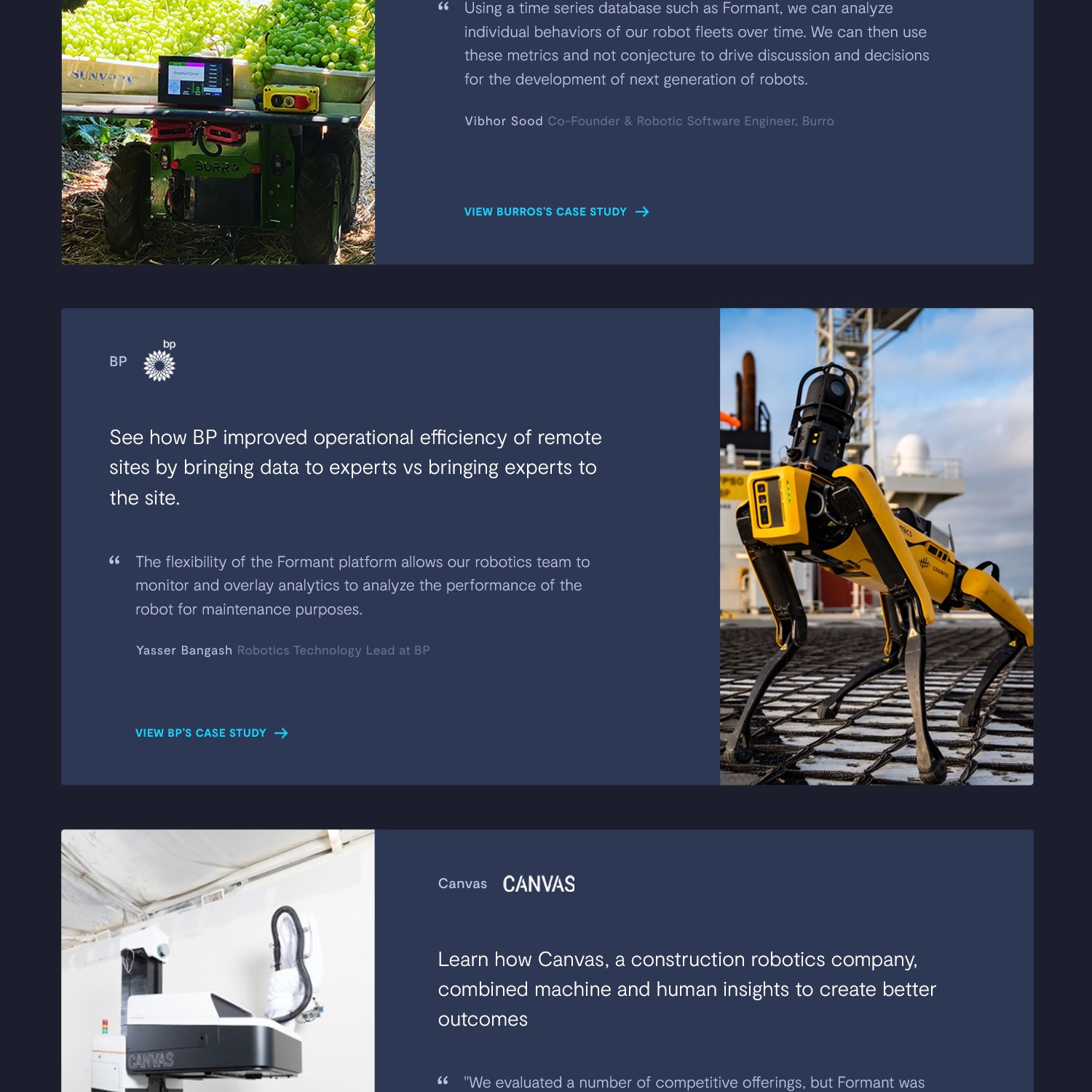
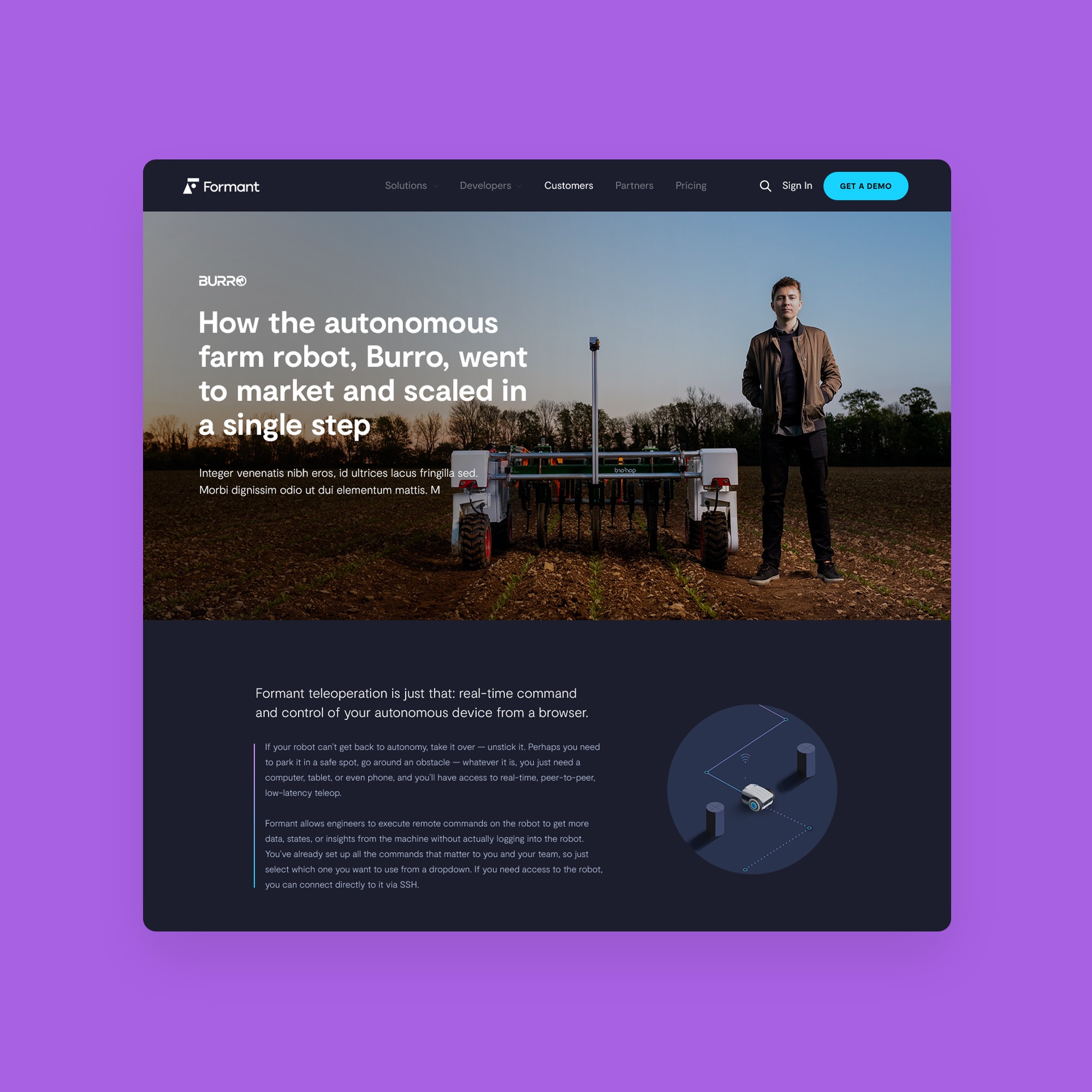
Blog and long-form content templates supporting both strategic and technical depth
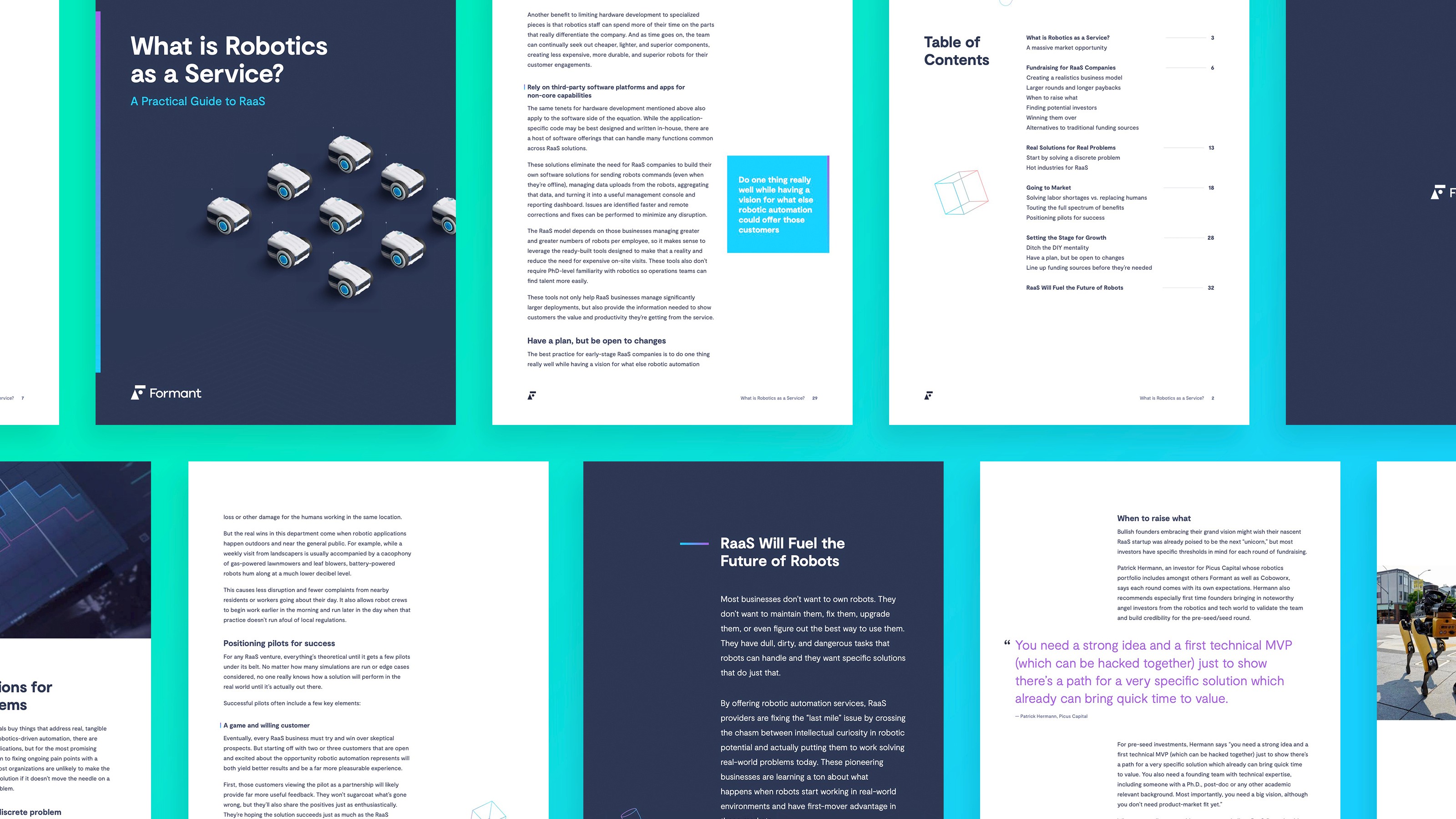
Downloadable PDFs with dedicated landing pages
Social campaign assets driving traffic into the system
Across channels, the design emphasized product reality over abstraction, reinforcing Formant as a scalable, ready-to-deploy SaaS platform rather than a conceptual solution.
The final system included:
A re-architected SaaS marketing website organized by audience intent
Conversion-focused landing pages with cold and warm variants
Blog and long-form content templates supporting both strategic and technical depth
Downloadable PDFs with dedicated landing pages
Social campaign assets driving traffic into the system
Across channels, the design emphasized product reality over abstraction, reinforcing Formant as a scalable, ready-to-deploy SaaS platform rather than a conceptual solution.



Impact
The new SaaS marketing system provided Formant with a scalable foundation for acquisition and storytelling. It enabled clearer executive-level conversations, deeper validation for technical stakeholders, and stronger alignment between the product interface and the external brand as the company continued to grow.
The new SaaS marketing system provided Formant with a scalable foundation for acquisition and storytelling. It enabled clearer executive-level conversations, deeper validation for technical stakeholders, and stronger alignment between the product interface and the external brand as the company continued to grow.
-
More work
More projects drawn from the same creative vision and aesthetic language.