Industry
Oil & Gas
Industry
Oil & Gas
Industry
Oil & Gas
Year
2024
Year
2024
Year
2024
Role
Digital Art Director
Role
Digital Art Director
Role
Digital Art Director
Chevron
The Challenge
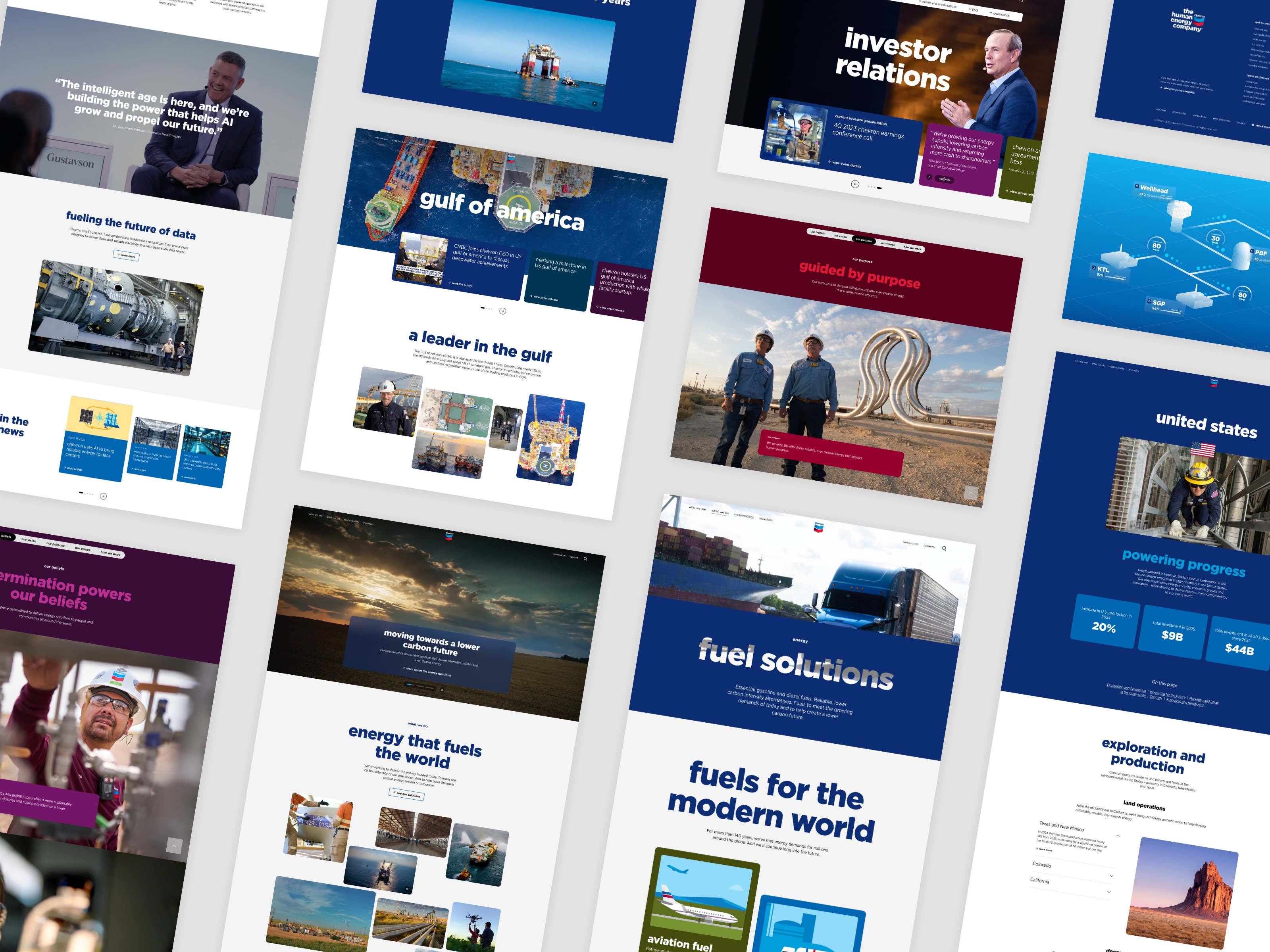
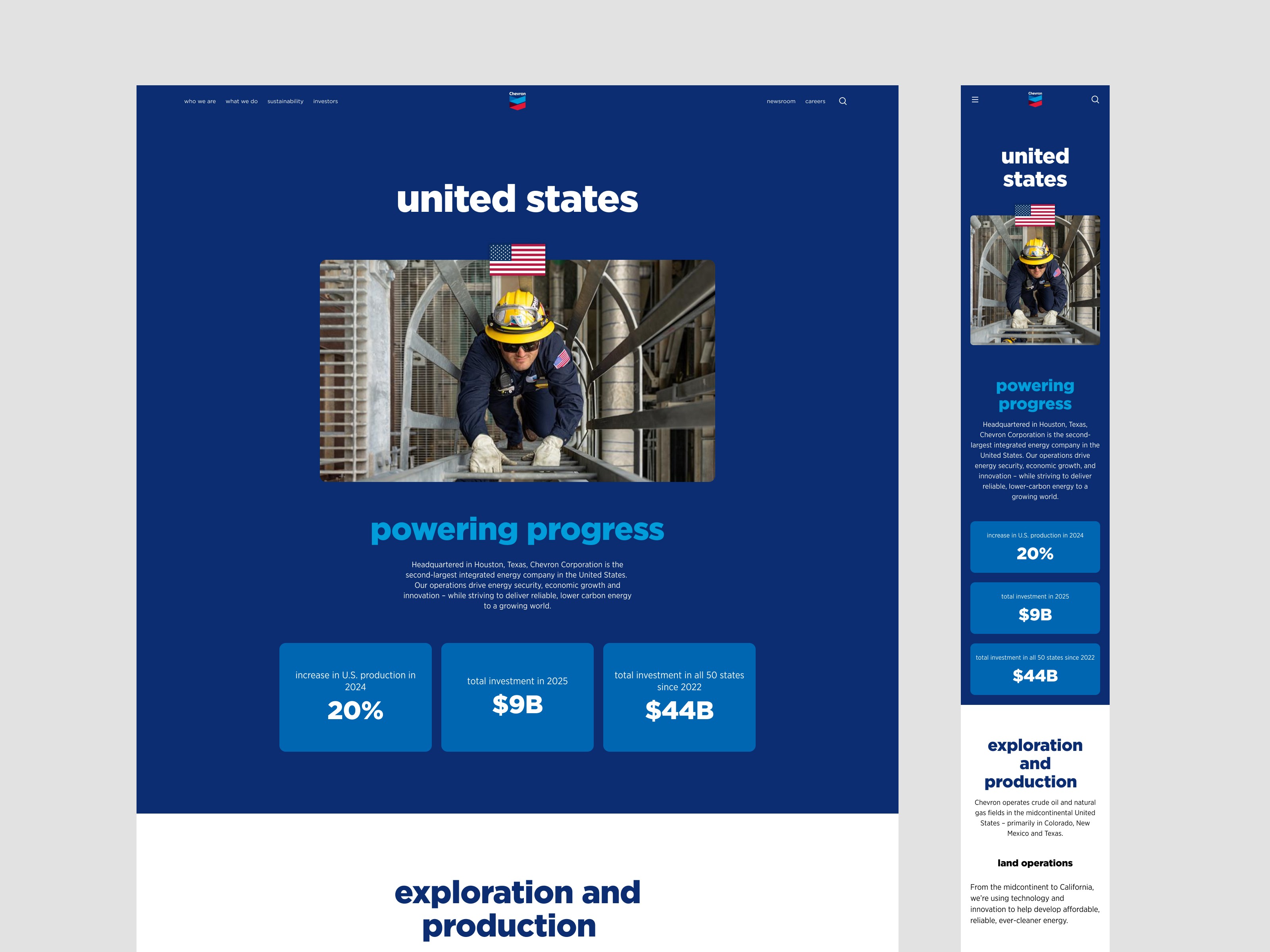
Chevron’s digital ecosystem had grown fragmented over time — hundreds of pages, inconsistent design patterns, and siloed workflows across teams and agencies. The company needed a unified design foundation that could bring clarity, consistency, and long-term scalability to its global web presence, while still honoring its brand legacy and broad audience: from investors and engineers to job seekers and community partners.
Chevron’s digital ecosystem had grown fragmented over time — hundreds of pages, inconsistent design patterns, and siloed workflows across teams and agencies. The company needed a unified design foundation that could bring clarity, consistency, and long-term scalability to its global web presence, while still honoring its brand legacy and broad audience: from investors and engineers to job seekers and community partners.
My Role
As Digital Art Director, I led the end-to-end design direction for Chevron’s global design system. This included strategy, execution, and collaboration across brand, engineering, and digital leadership. I guided a cross-functional team through the development of a modern, accessible, and scalable system — from early audits to implementation and governance.
As Digital Art Director, I led the end-to-end design direction for Chevron’s global design system. This included strategy, execution, and collaboration across brand, engineering, and digital leadership. I guided a cross-functional team through the development of a modern, accessible, and scalable system — from early audits to implementation and governance.
The Approach
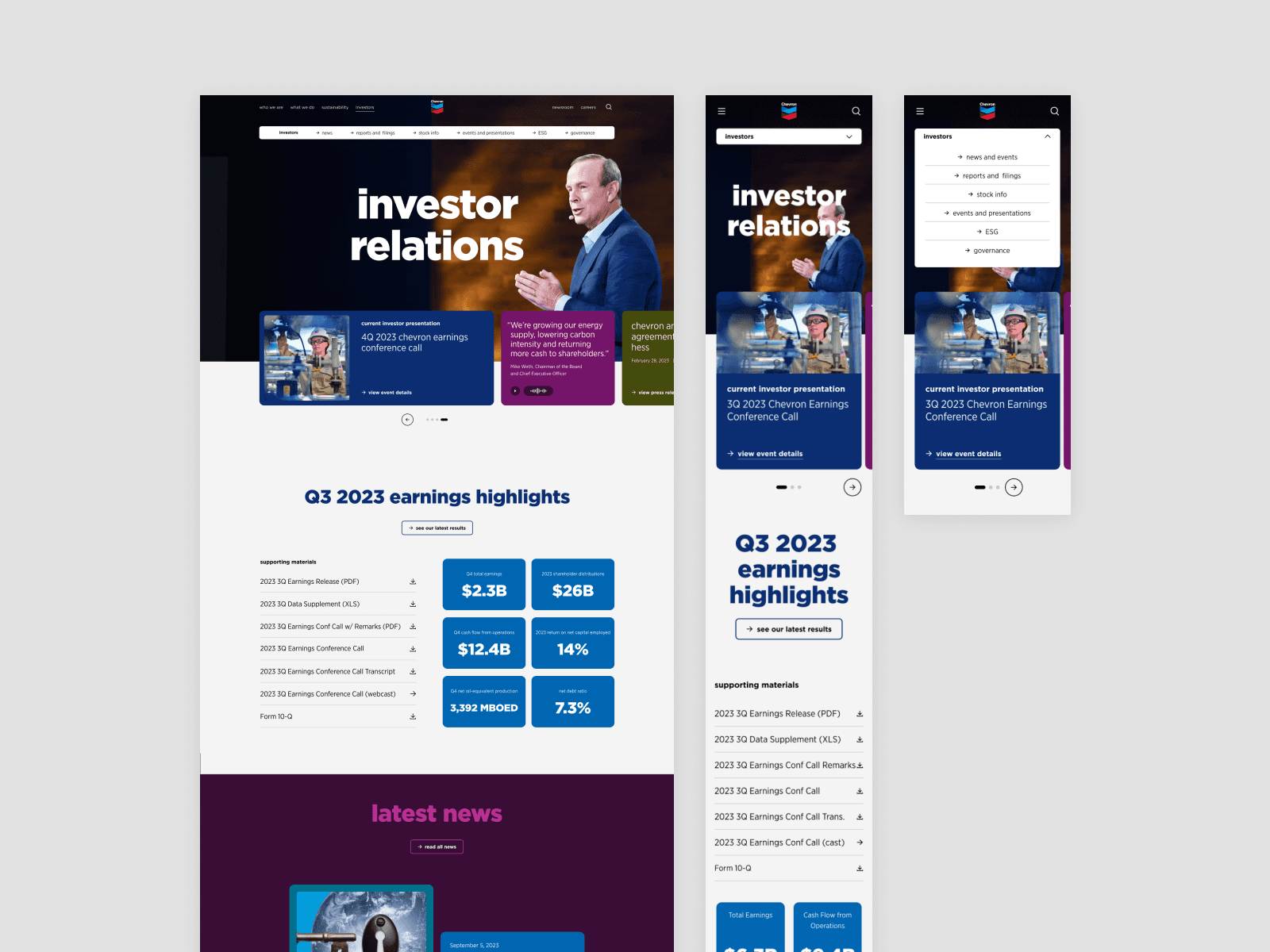
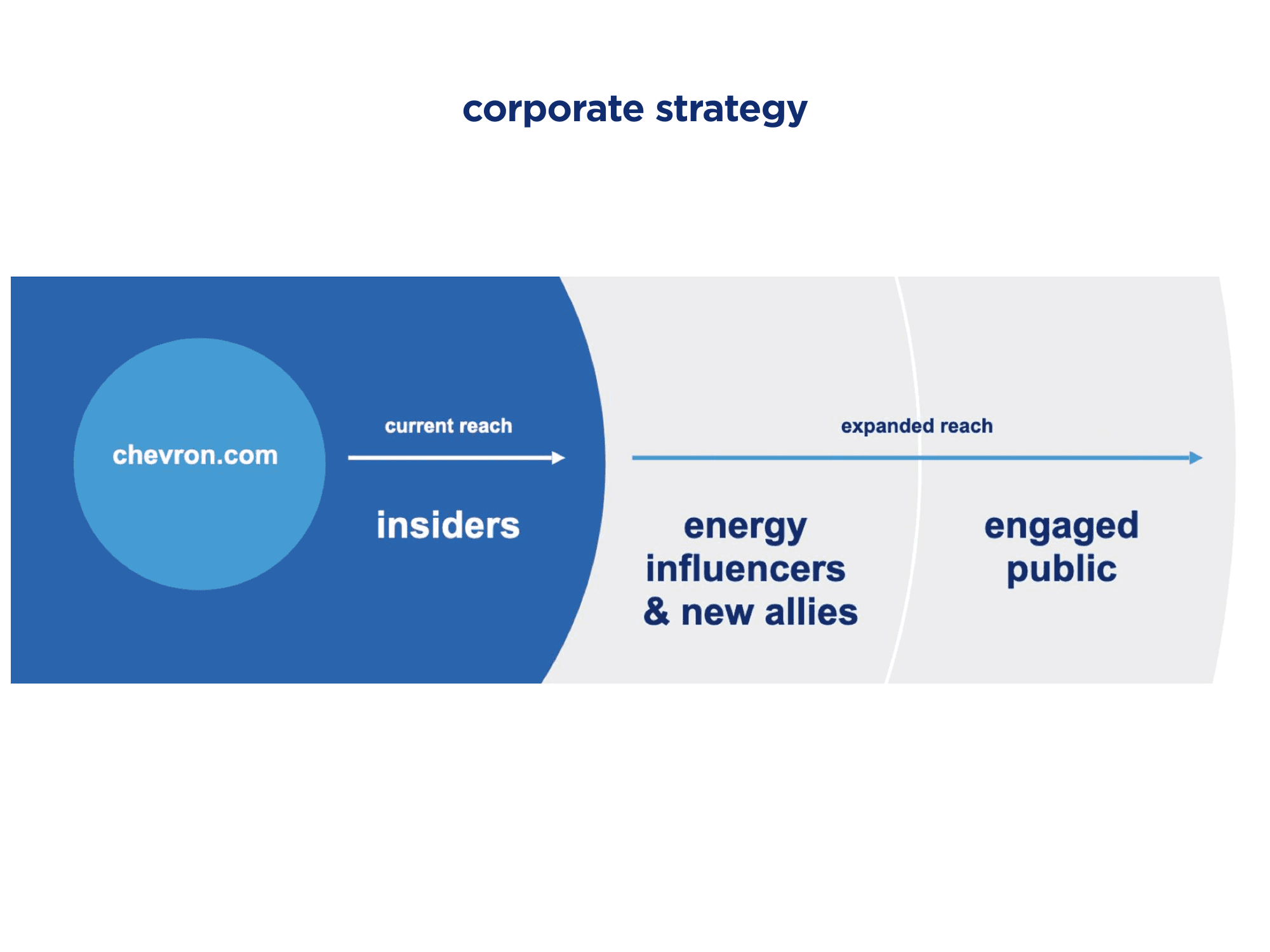
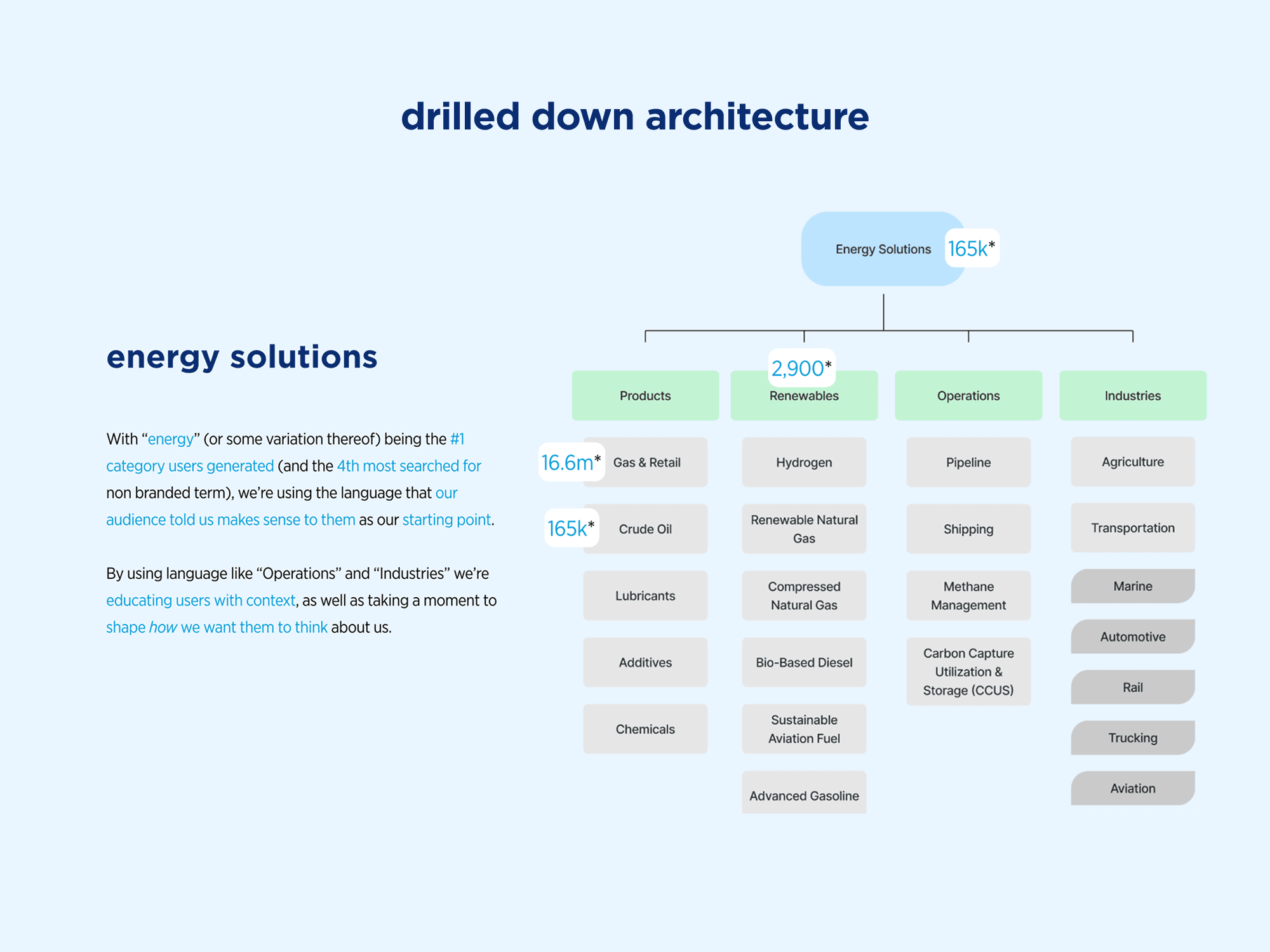
Our work began with a deep research and analysis phase to understand how customers navigated Chevron’s digital ecosystem. Led by the data analytics and UX research teams, I worked closely with them to review and interpret the findings — including heatmaps, drop-off patterns, search behavior, and task-completion data. Using this research, I validated key insights and translated them into design considerations that informed the overall experience strategy.
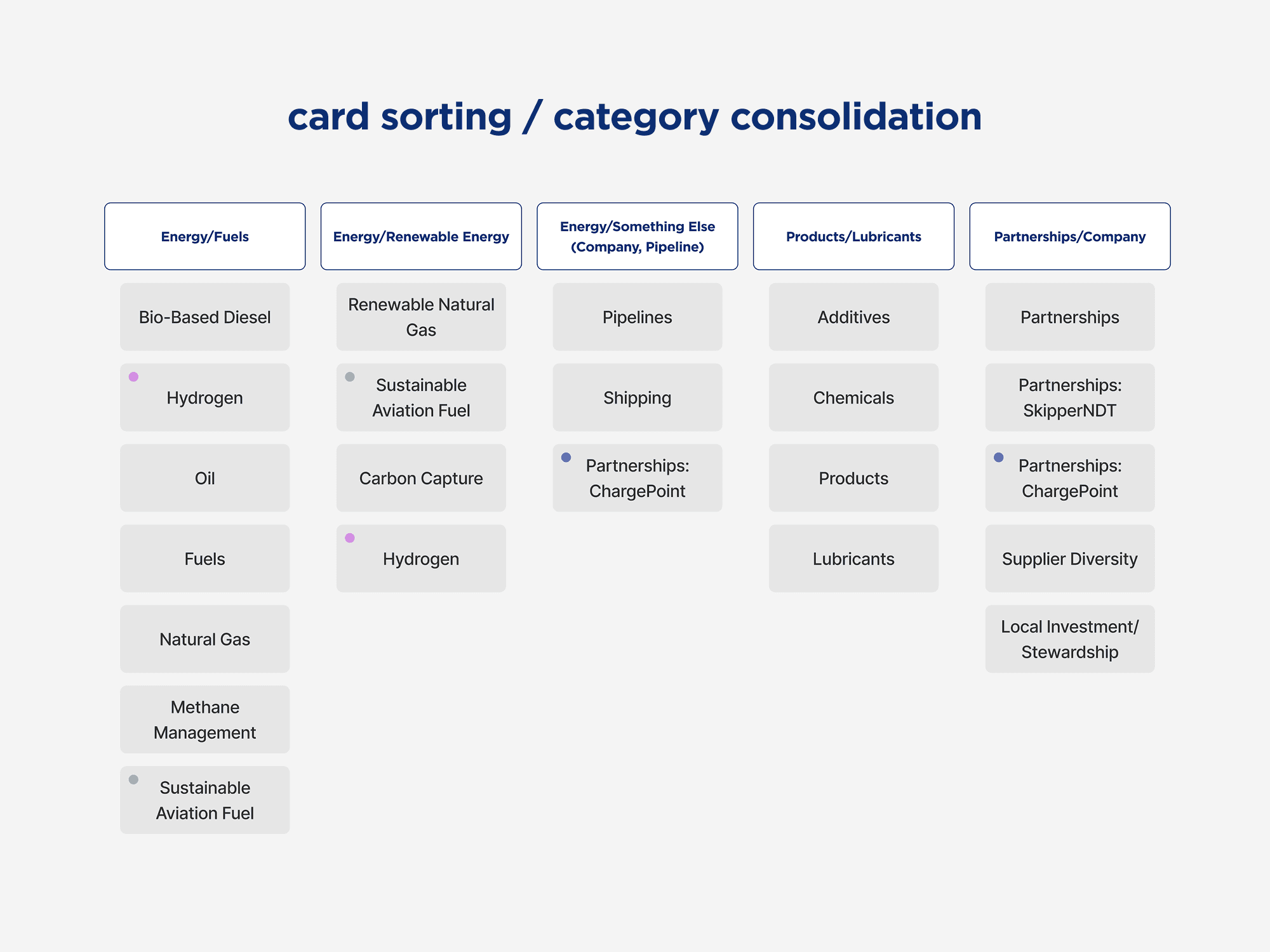
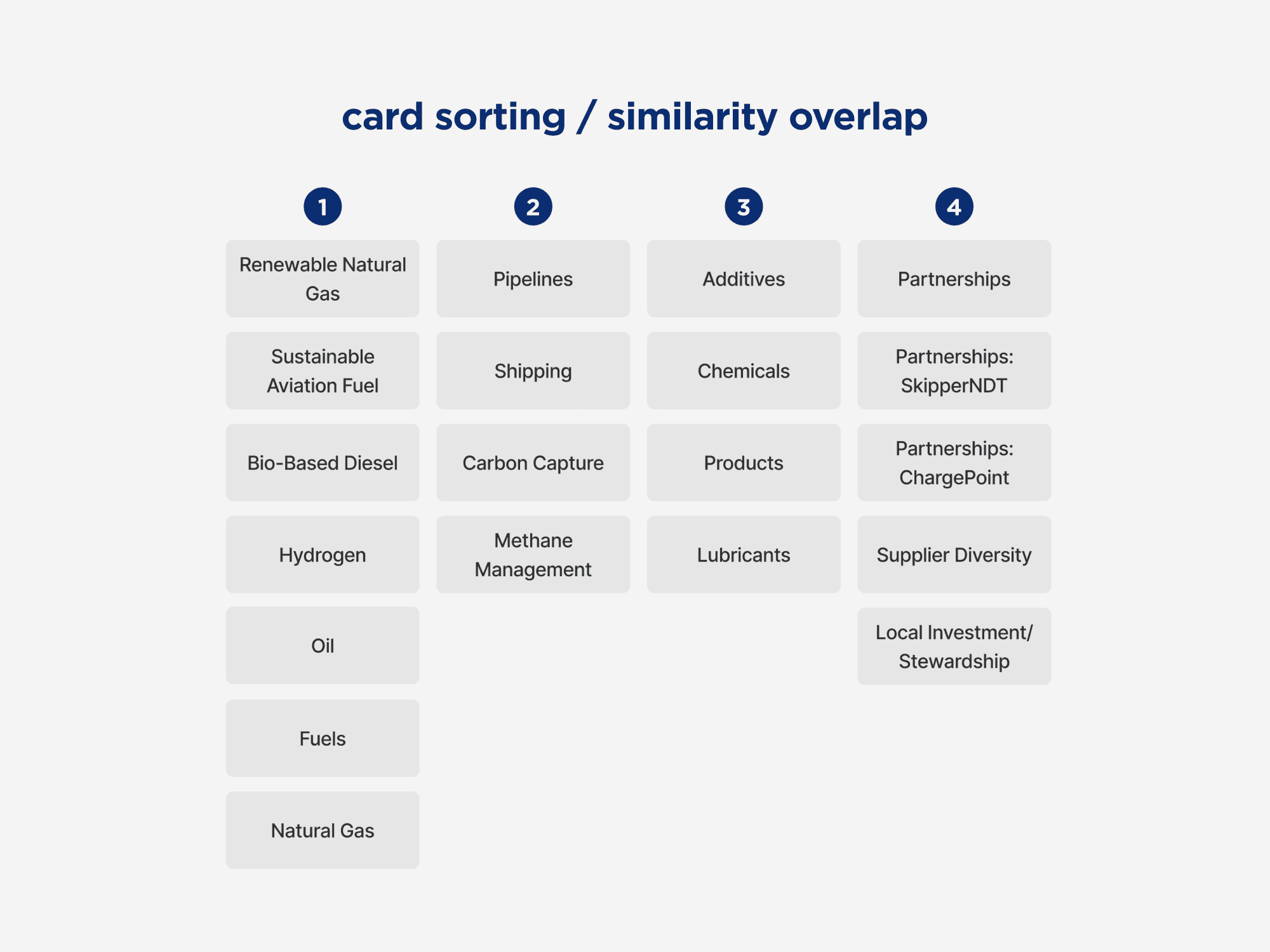
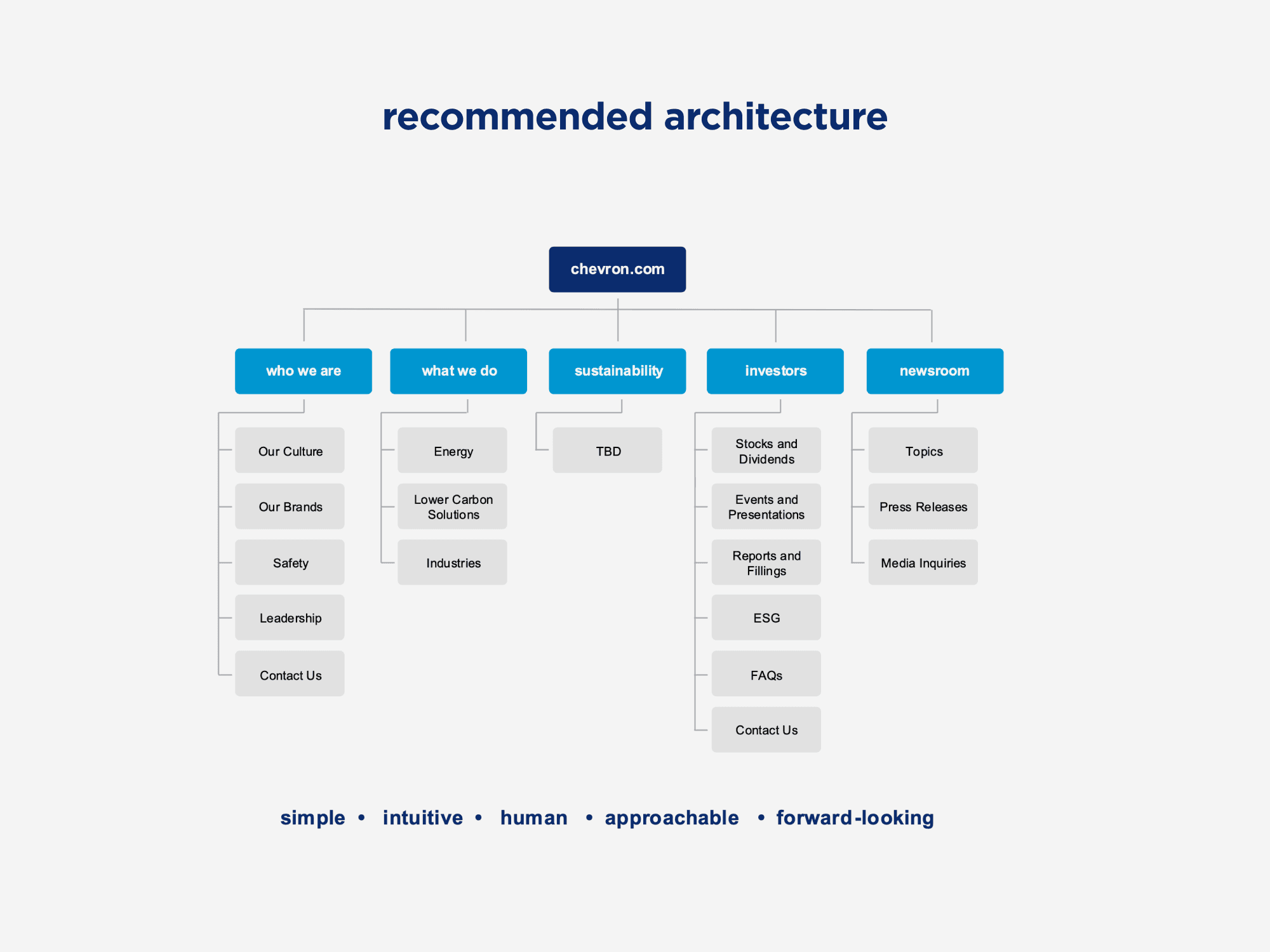
I organized the research outputs — information-architecture maps, component evaluations, and card-sorting results — into a clearer picture of where users were struggling and where the system needed simplification. These synthesized insights shaped early decisions around content hierarchy, navigation models, and the design principles that would guide the new system before any visual design began.
Our work began with a deep research and analysis phase to understand how customers navigated Chevron’s digital ecosystem. Led by the data analytics and UX research teams, I worked closely with them to review and interpret the findings — including heatmaps, drop-off patterns, search behavior, and task-completion data. Using this research, I validated key insights and translated them into design considerations that informed the overall experience strategy.
I organized the research outputs — information-architecture maps, component evaluations, and card-sorting results — into a clearer picture of where users were struggling and where the system needed simplification. These synthesized insights shaped early decisions around content hierarchy, navigation models, and the design principles that would guide the new system before any visual design began.
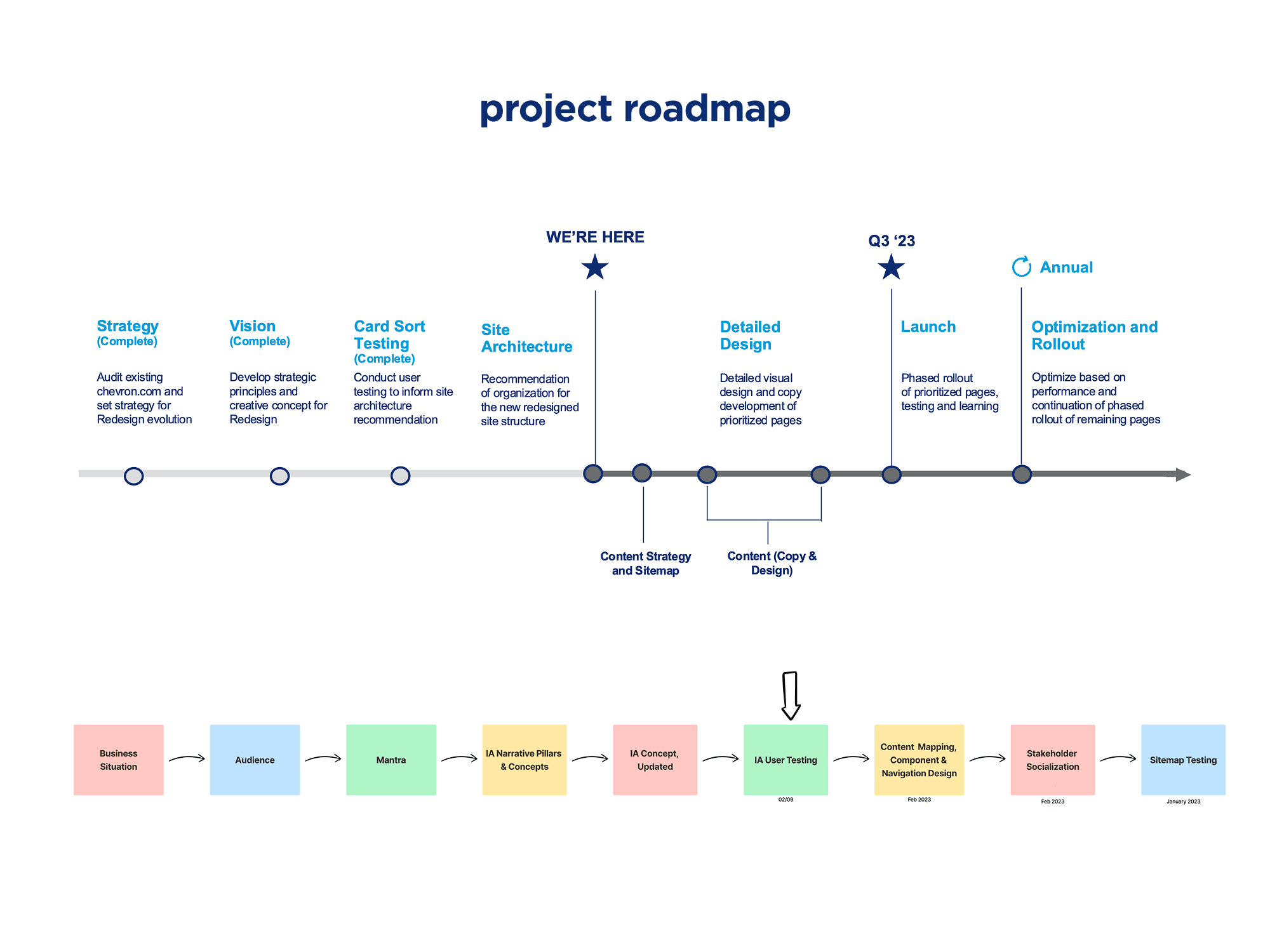
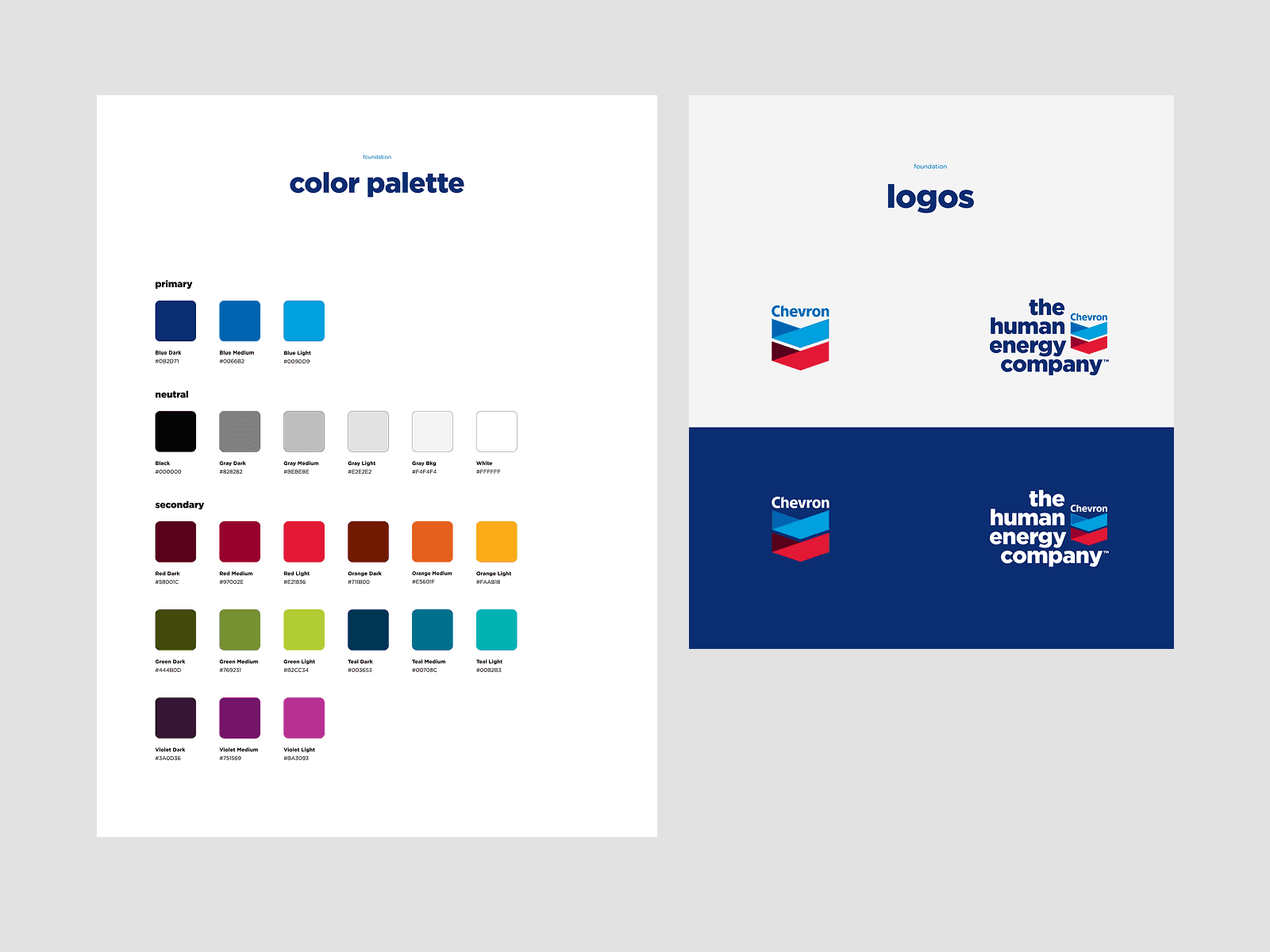
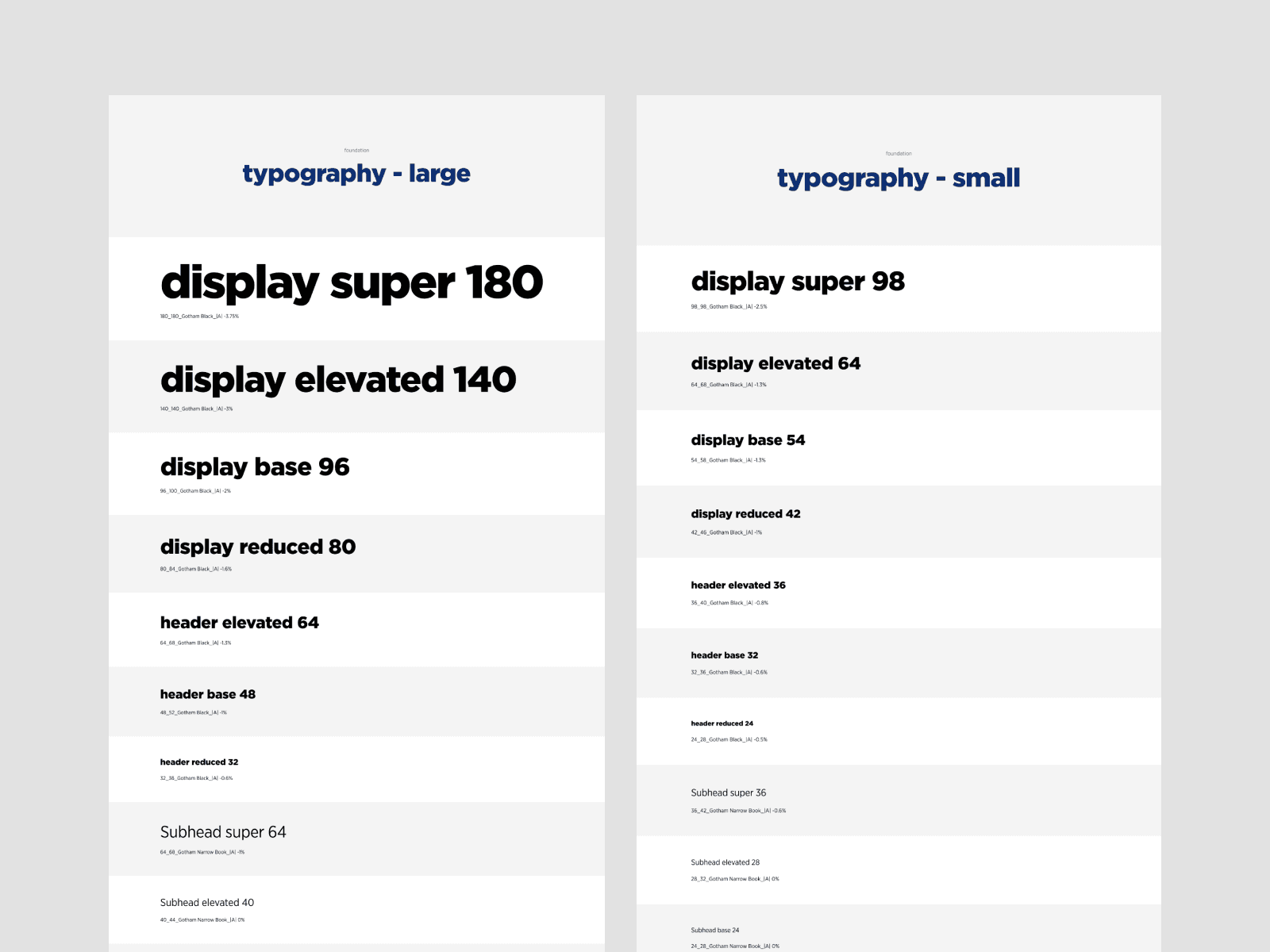
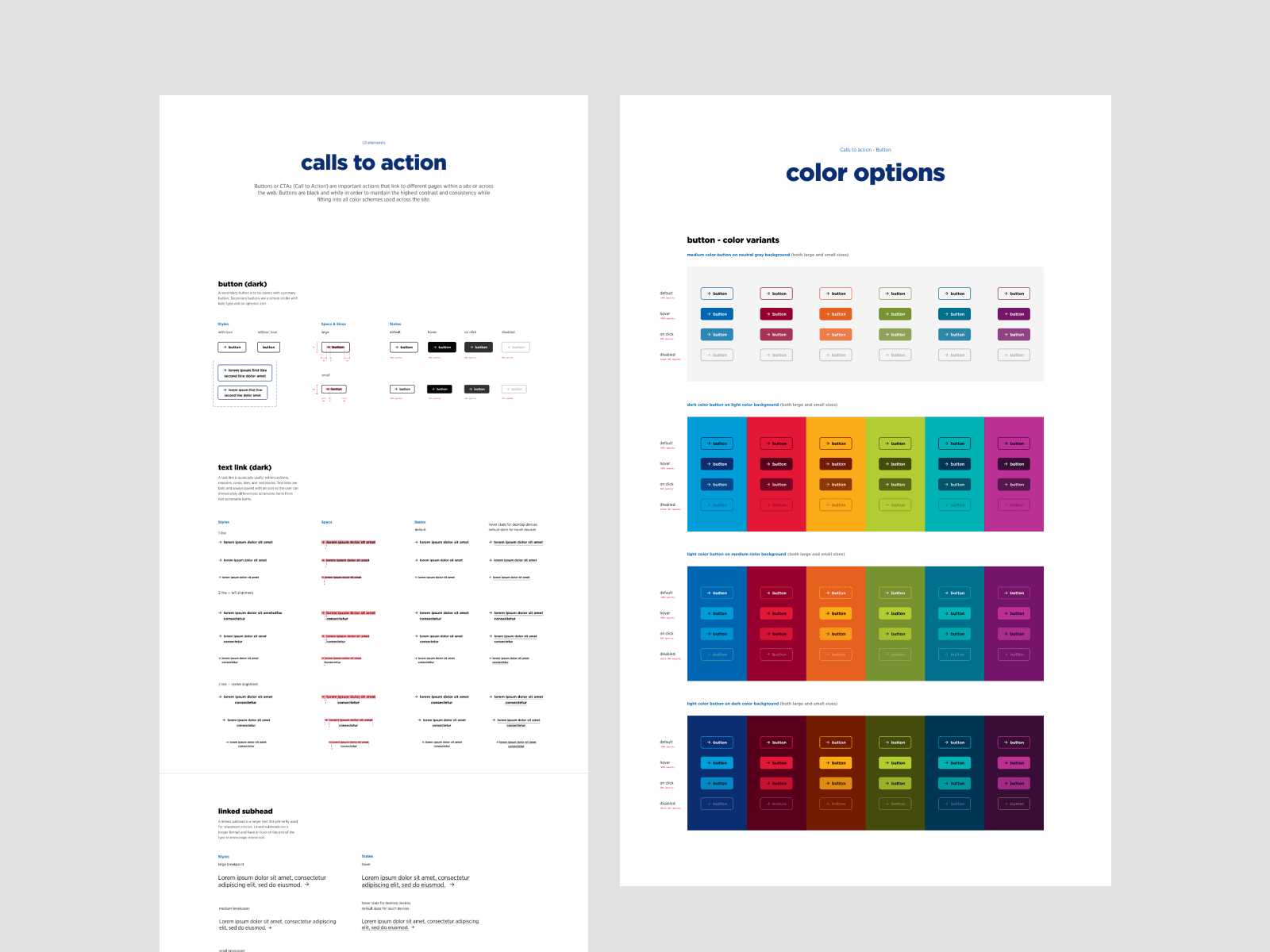
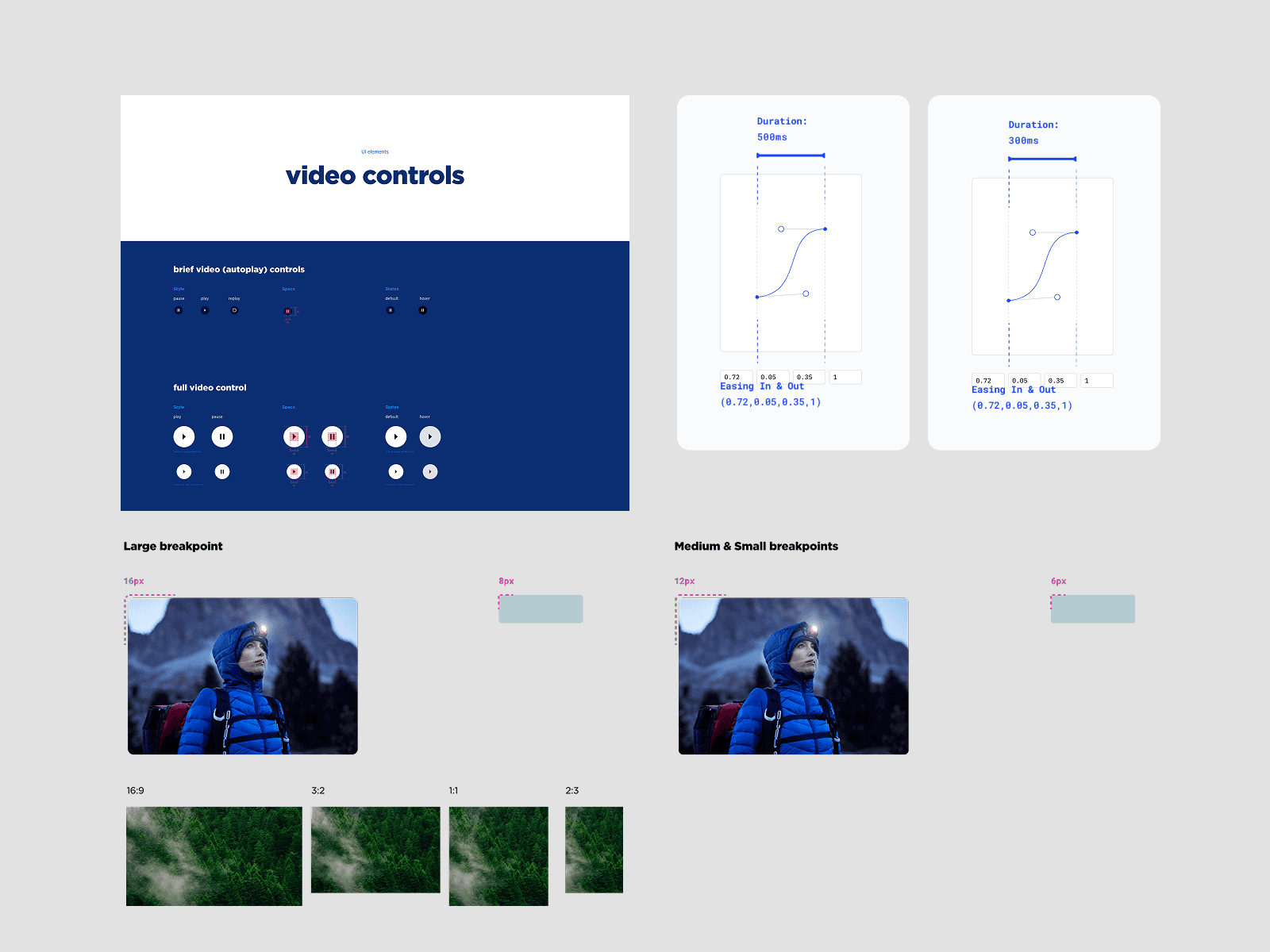
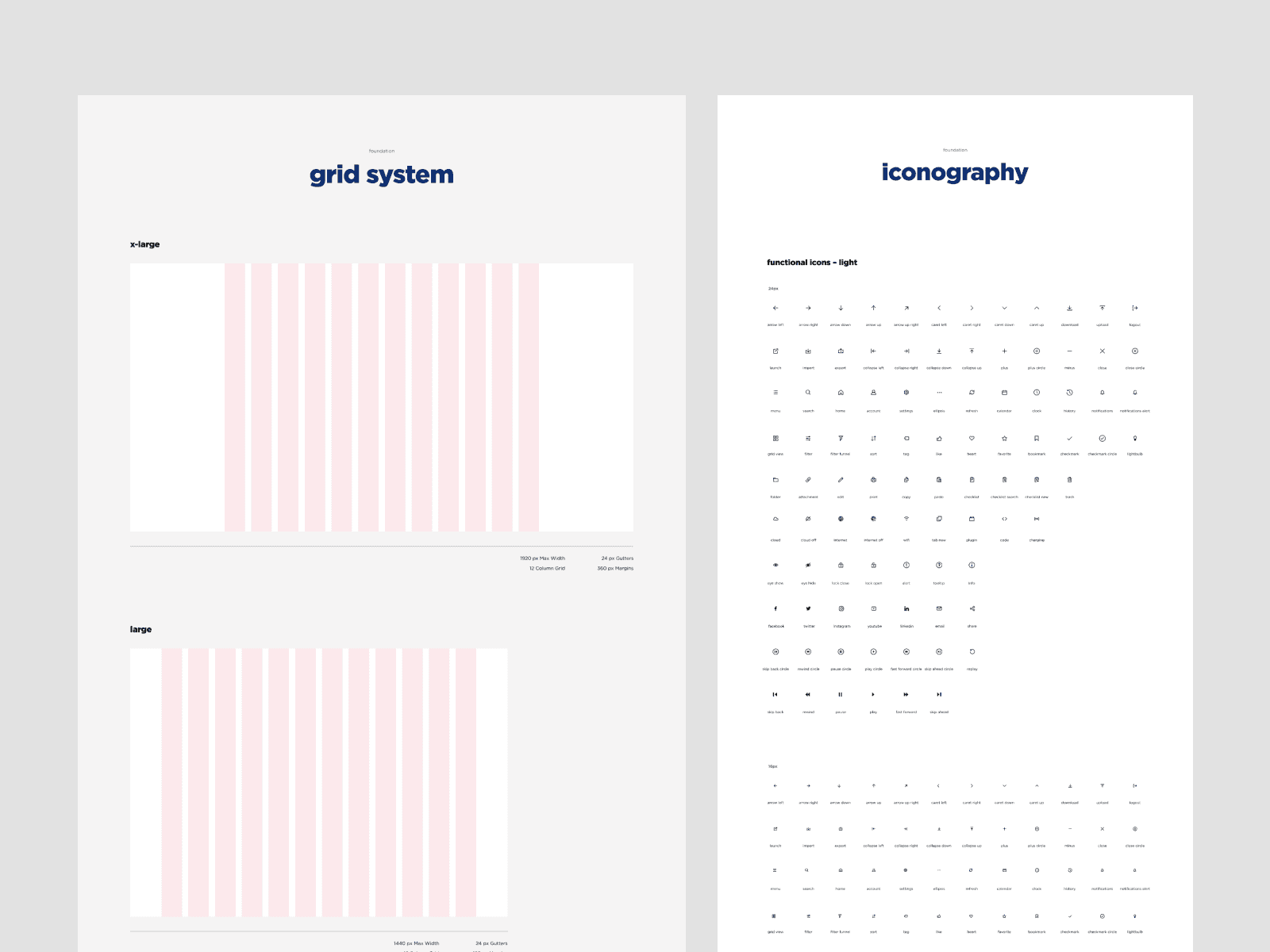
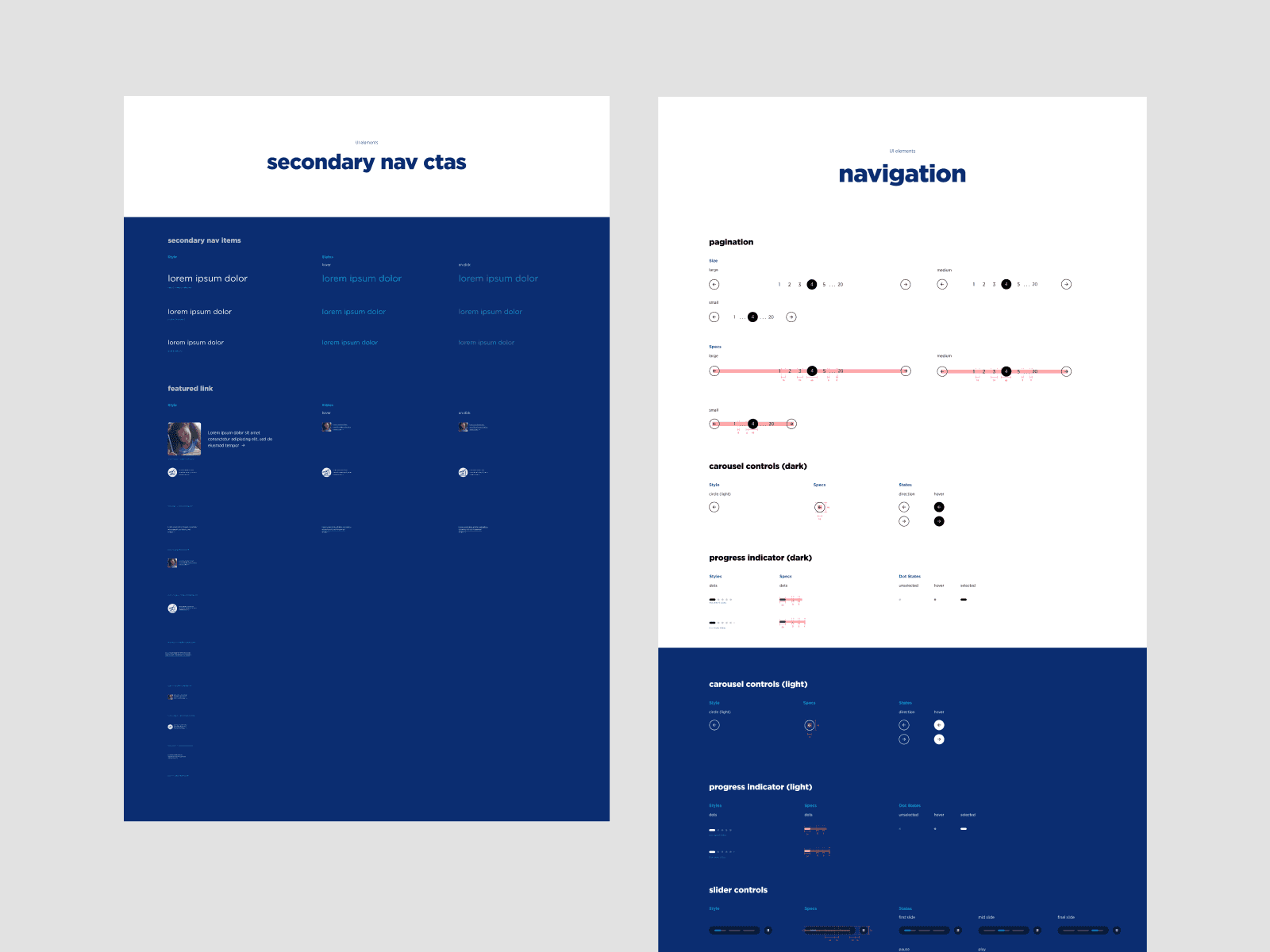
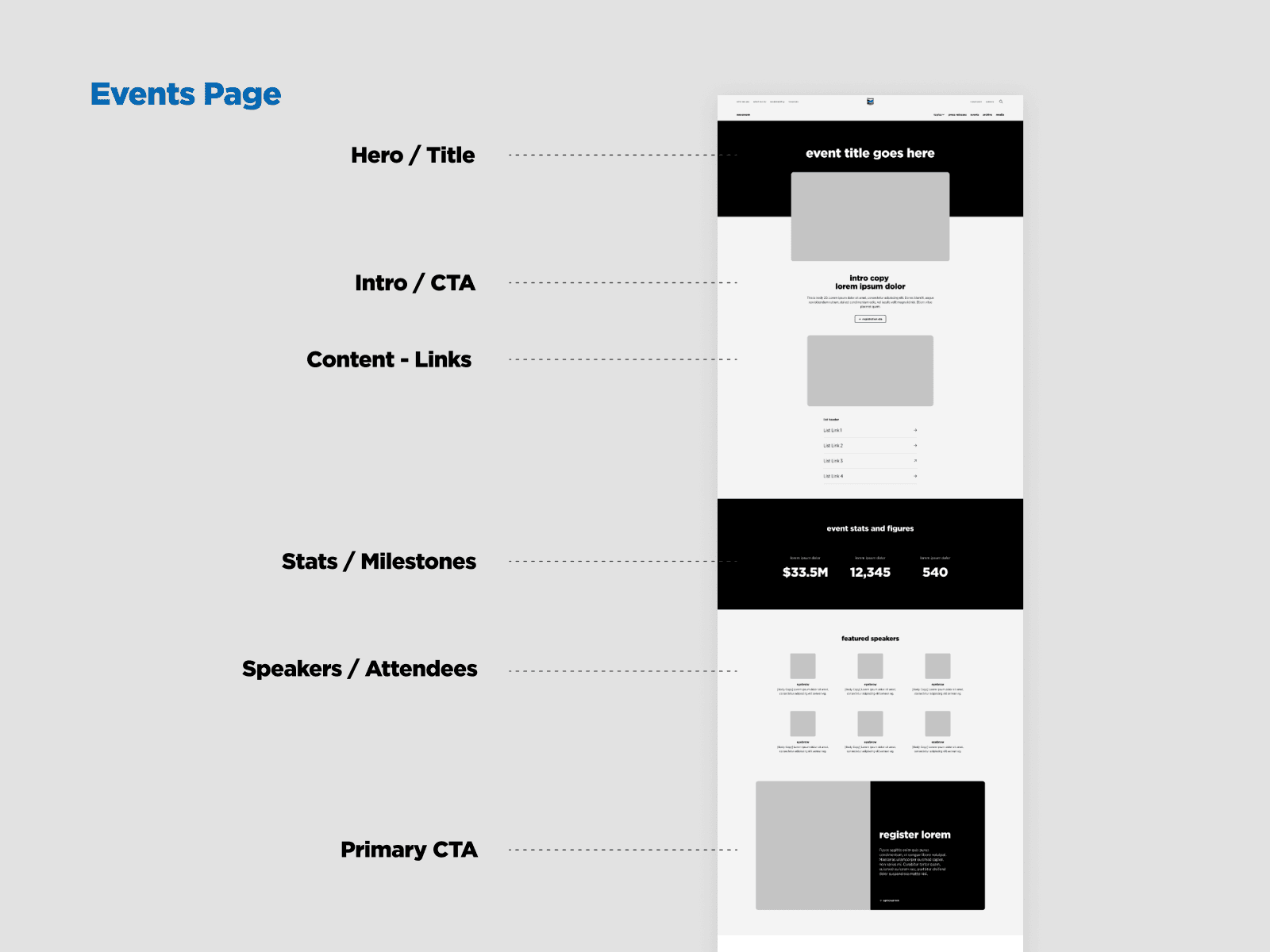
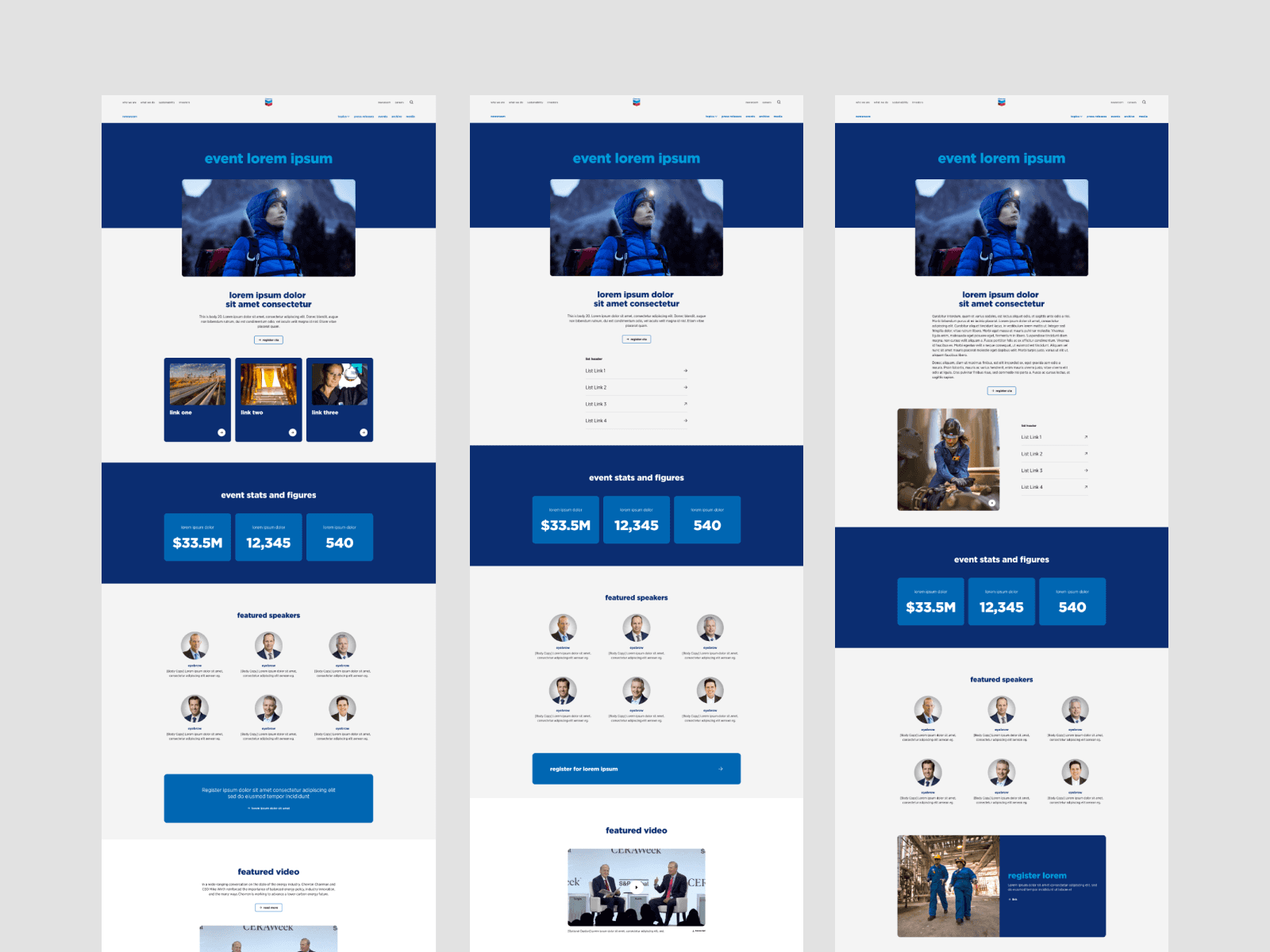
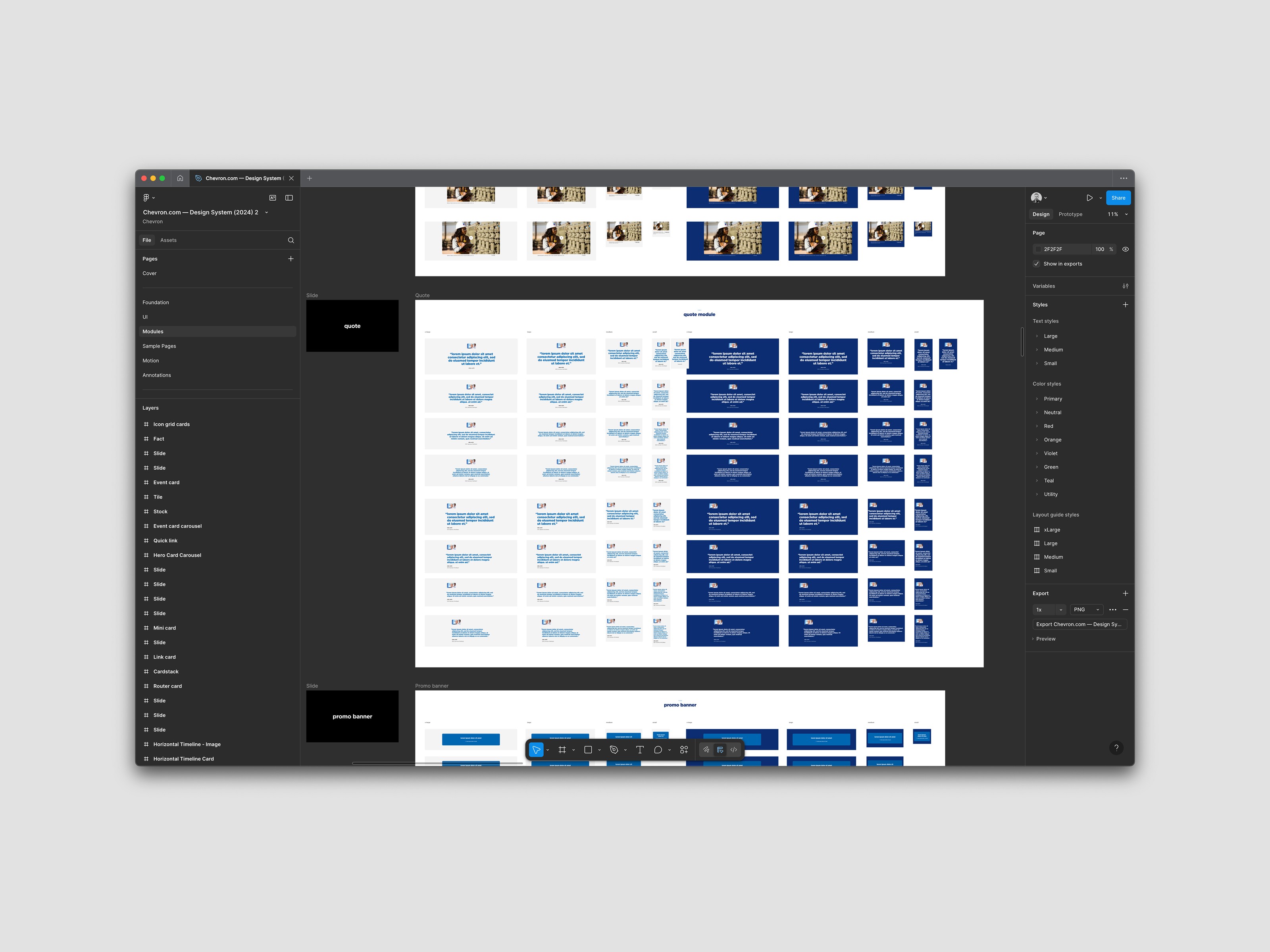
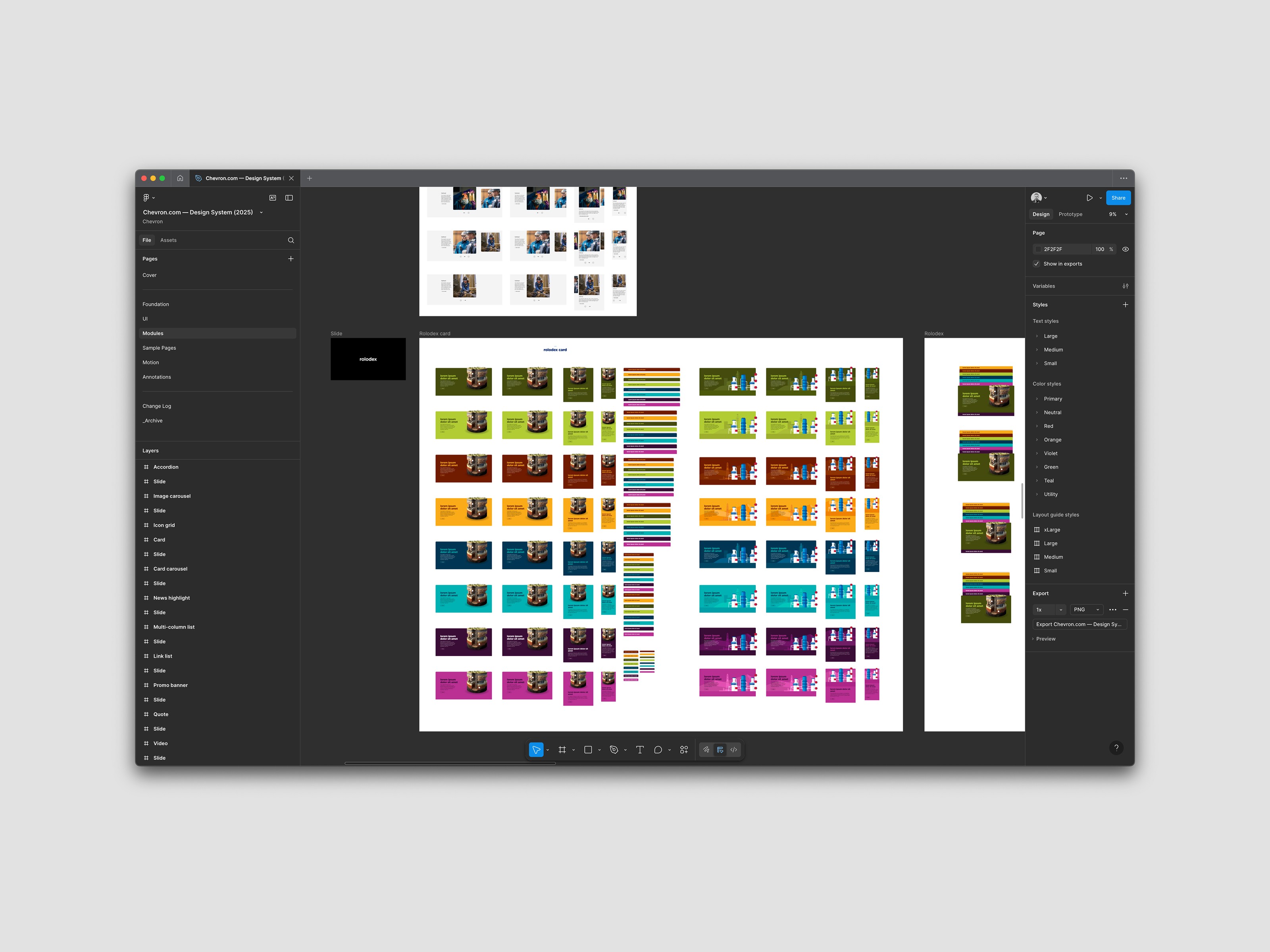
With a clear strategy in place, we moved into system creation. I defined a new visual and interaction framework rooted in accessibility, clarity, and brand coherence — establishing type scales, color tokens, iconography, spacing rules, motion guidance, and interaction states. From there, I led the buildout of a modular component library in Figma, ensuring each component was flexible enough to scale across multiple business units and content types.
I collaborated closely with engineering partners to align on naming conventions, responsive rules, and implementation details, ensuring accuracy and long-term maintainability. To support adoption, we developed documentation and governance models so internal teams and agency partners could confidently design and build within the system, significantly reducing reliance on external resources.
With a clear strategy in place, we moved into system creation. I defined a new visual and interaction framework rooted in accessibility, clarity, and brand coherence — establishing type scales, color tokens, iconography, spacing rules, motion guidance, and interaction states. From there, I led the buildout of a modular component library in Figma, ensuring each component was flexible enough to scale across multiple business units and content types.
I collaborated closely with engineering partners to align on naming conventions, responsive rules, and implementation details, ensuring accuracy and long-term maintainability. To support adoption, we developed documentation and governance models so internal teams and agency partners could confidently design and build within the system, significantly reducing reliance on external resources.
The Outcome
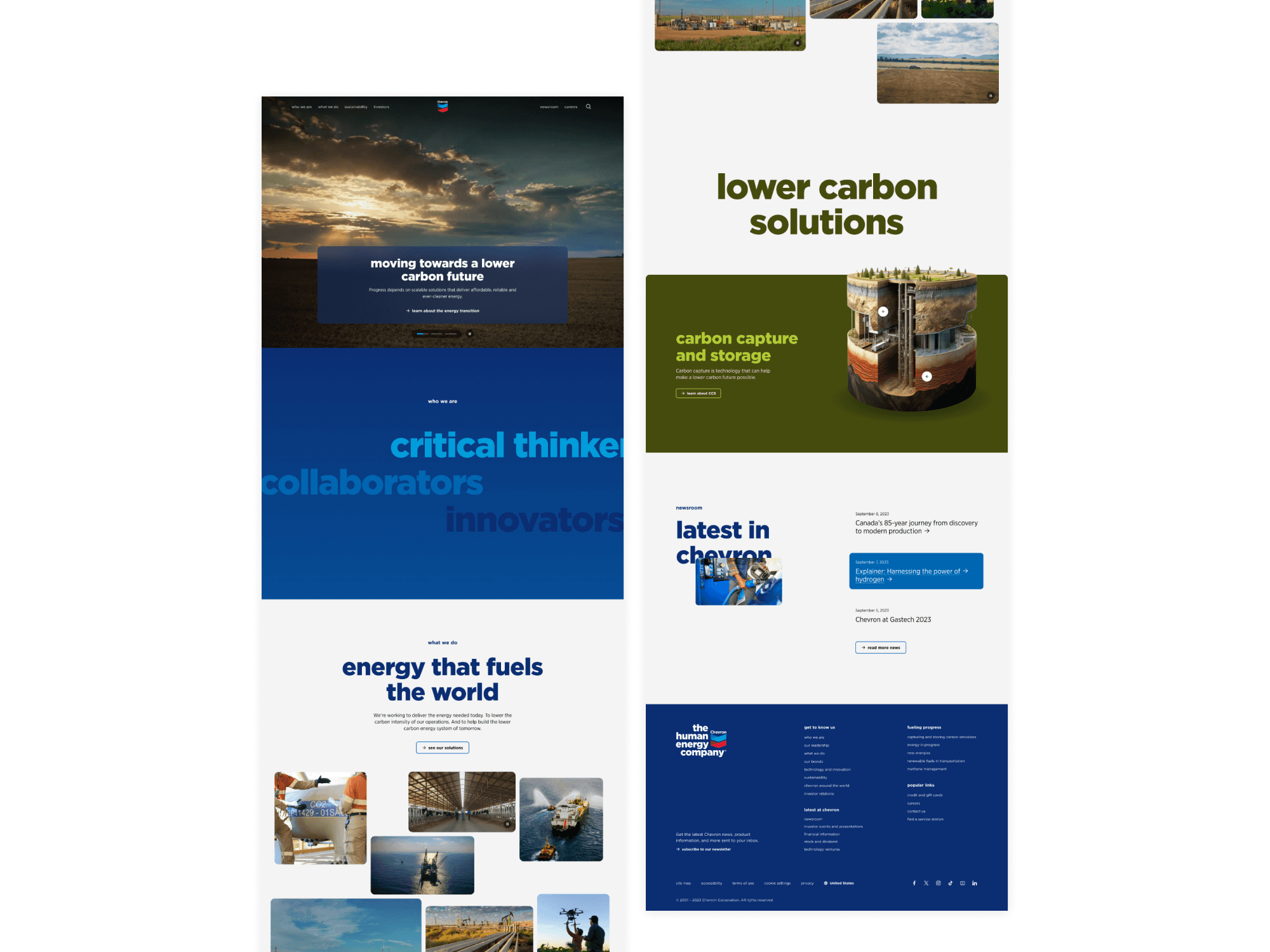
The Chevron Design System became the backbone of a full digital transformation — one that streamlined process, improved product velocity, and drove real financial impact. Page launch timelines dropped from 6 months to 60 days. The average per-page cost dropped by $788K. Creating and managing content in-house saved $375K annually on emails and $800K on social media. And by replacing outsourced design efforts with scalable internal tools, Chevron reduced annual agency costs by $5 million.
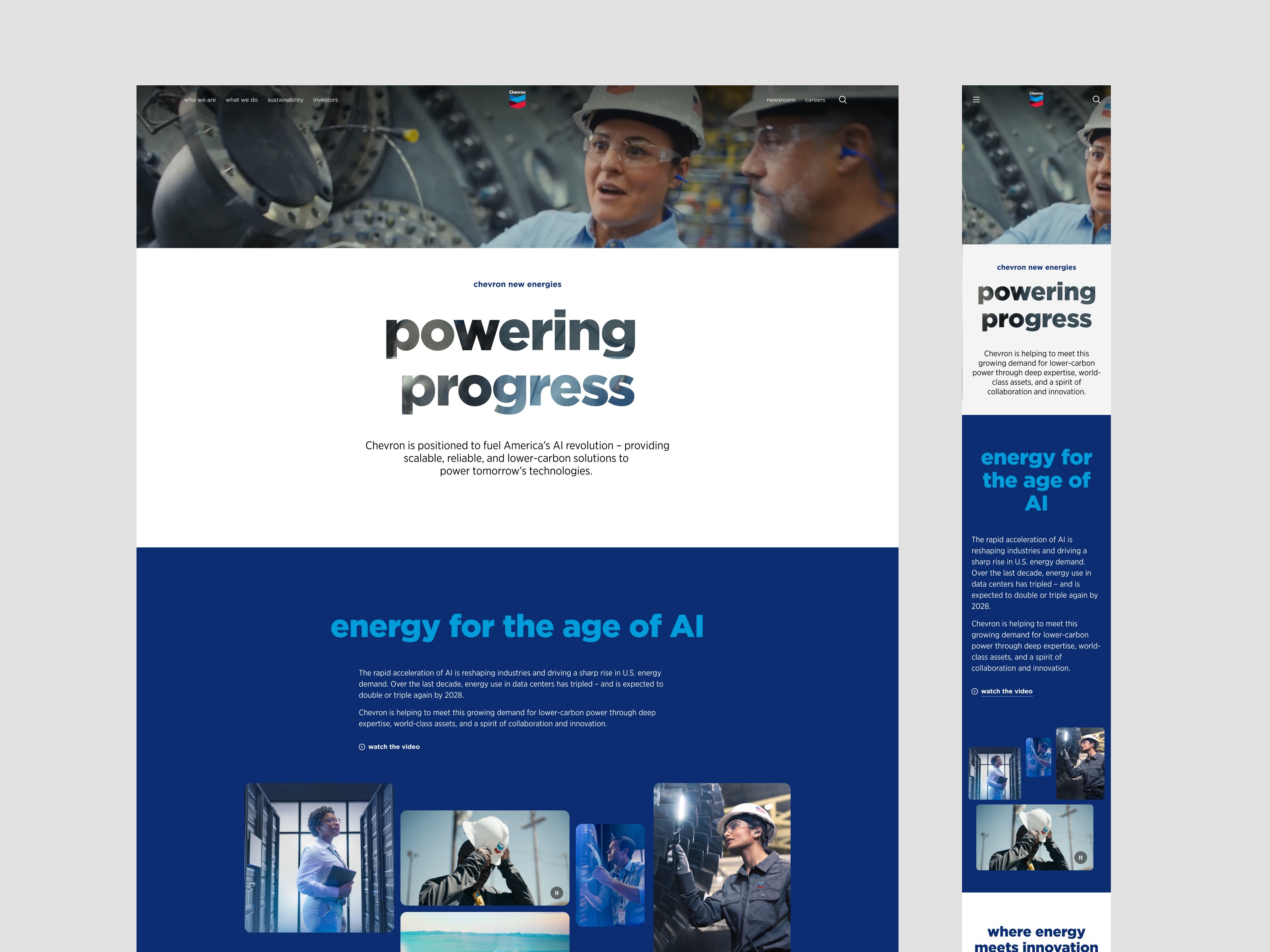
Beyond the numbers, the system empowered cross-disciplinary teams to design and build with confidence, speed, and consistency. Chevron.com is now cohesive, accessible, and future-ready — a platform that reflects the company’s leadership in energy, technology, and digital innovation.
The Chevron Design System became the backbone of a full digital transformation — one that streamlined process, improved product velocity, and drove real financial impact. Page launch timelines dropped from 6 months to 60 days. The average per-page cost dropped by $788K. Creating and managing content in-house saved $375K annually on emails and $800K on social media. And by replacing outsourced design efforts with scalable internal tools, Chevron reduced annual agency costs by $5 million.
Beyond the numbers, the system empowered cross-disciplinary teams to design and build with confidence, speed, and consistency. Chevron.com is now cohesive, accessible, and future-ready — a platform that reflects the company’s leadership in energy, technology, and digital innovation.
“
Jon has an incredible eye for design and a true ability to bring creative concepts to life with precision, clarity, and sophistication. He demonstrated excellent leadership and patience during significant project pivots, consistently asking the right questions and providing multiple solutions. His enthusiasm and willingness to offer valuable guidance to other creatives improved our entire team.
Jon has an incredible eye for design and a true ability to bring creative concepts to life with precision, clarity, and sophistication. He demonstrated excellent leadership and patience during significant project pivots, consistently asking the right questions and providing multiple solutions. His enthusiasm and willingness to offer valuable guidance to other creatives improved our entire team.
Joe Rivera, Creative Director
“
Jon has a unique ability to bring together people from different disciplines - designers, writers, engineers, strategists, and producers - and turn a diverse group into a unified, collaborative force.
Jon has a unique ability to bring together people from different disciplines - designers, writers, engineers, strategists, and producers - and turn a diverse group into a unified, collaborative force.
Jill Canada, Design Program Manager
-
More work
More projects drawn from the same creative vision and aesthetic language.